Showing posts with label irish. Show all posts

Monday, June 1, 2015

Transgressive Poetry

Grania Uaile (Grace O'Malley)

One night as oppressed with soft slumbers I lay,
And dreamed of Old Erin oft thought of by day,
With the long, wasting wars between Saxon and Gael,
Up rose the bright vision of fair Grania Uaile.

Old Erin's green mantle around her was flung,
Adown her fair shoulders the rich tresses hung,
Her eyes like the sun of the young morning shone,
Whilst her harp sent forth strains of the days that are gone.

Of Erin's fair daughters a circle was seen,
Each one with her distaff surrounding the Queen,
Whose sweet vocal chorus was heard to prolong
The soul stirring anthems of harp and of song.

To Erin what shame and lasting disgrace
That her sons should be crushed by a vile foreign race,
Who have banished her priests and polluted her fanes,
And turned to a desert her beautiful plains!

-- John McHale, archbishop of Tuam


As sung by the rather political Wolfe Tones:

Note: the real Grace O'Malley cut her hair off because long hair
could get tangled in the rigging of the ship.
A three hour epic Grainne Uaile was supposed to have been released in April. It's supposed to be spelled Grainne Mhaol (graŋyeh wail) but that would only confuse English speakers. The movie folks said of their film:


"It was very important for us to show the character of a strong woman in this movie. To move away from the typical stereotypes we have seen in recent years..."
However, it seems to TOF that women acting masculine is the main stereotype of recent years. It is saved somewhat in this case by the historical facts of Grace O'Malley, the "Pirate Queen," who while actually one of the 1% did make a living by extorting tolls and taxes from ships passing her many castles in exchange for safe passage.

Thursday, September 4, 2014

The Ships That Sail the Air

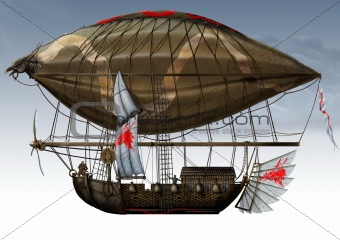
Every writer of fantasy and science fiction is either Irish or ought to be, as there is something SFnal about the Irish imagination. In the Annals of Ulster, Annals of Tigernach, Annals of Clonmacnoise, and the Annals of the Four Masters, as well as in some manuscripts of the Lebar Gábala there is an odd story about ships sailing in the sky in (depending on which annal) the year 743, 744, or 748.  The Annals of Ulster, for example, state laconically that “Ships with their crews were seen in the air.” (The entry is for 749, but the annals were one year ahead at that point.) This is replicated in the Four Masters at 743 as "Ships with their crews, were plainly seen in the sky this year." It's listed right after "Congal, son of Eigneach, lord of the Airtheara, was slain at Rath Esclair, by Donnboo, son of Cubreatan." One of those two notes was more of a stop-the-presses man-bites-dog kind of thing, and TOF does not mean the Fell Deed of Donnboo, which TOF cannot even write without giggling. What a name for a barbarian hero. Donnboo. But we digress.

Like all good writers, the annalist leaves the reader wanting to know more.  Ships in the air? And their crews? WTF? Early medieval zeppelins? UFOs?

An account in the Book of Ballymote states regarding Congalach, a tenth-century high king of Ireland:
Congalach son of Mael Mithig was at the assembly of Tailtiu one day when he saw a ship moving through the air. Then one of them [i.e. the ship's crew] cast a spear at a salmon, so that it came down in front of the assembly. A man from the ship came after it. When he seized one end of it from above, a man seized it from below. "You are drowning me!" said the man aloft. "Let him go," said Congalach. Then he is released, and swims upward away from them.


There is a marvelous invention here: That the atmosphere is an ocean and the ground is the bottom of a sea, and all earthly things are like reefs and fish. Then aliens come along for the fishing and one of them is almost drowned by a curious earthling holding on to the end of a fishing spear, until the wise ard ri bids him let go to save the alien's life. A brief, but satisfying story of first contact.

This version was recounted in the poem De mirabilibus Hibernie (On the Wonders of Ireland), by Bishop Patrick of Dublin (1074-84) as the nineteenth marvel De naui que uisa est in aere, “Of a ship glimpsed in the air.” The bishop writes:
A king of the Irish once attended an assembly
With quite a crowd, a thousand in beautiful order.
They see a sudden ship sail the sky,
And someone who casts a spear after fish:
It struck the ground, and swimming he retrieved it.
Who can hear of this without praising the Lord above?
Later, the story was transferred to Clonmacnoise. Seamus Heaney wrote a poem of this version:

"The Annals Say" -- Seamus Heaney
The annals say: when the monks of Clonmacnoise
Were all at prayers inside the oratory
A ship appeared above them in the air.

The anchor dragged along behind so deep
It hooked itself into the altar rails
And then, as the big hull rocked to a standstill,

A crewman shimmied and grappled down the rope
And struggled to release it. But in vain.
‘This man can’t bear our life here and will drown,’

The abbot said, ‘unless we help him.’ So
They did, the freed ship sailed, and the man climbed back
Out of the marvellous as he had known it.
Throughout all these versions, from the brief one-liner in the Annals of Ulster through the fuller account in the Book of Ballymote to the transfer of location to Clonmacnoise, TOF is struck by the sheer matter-of-factness of the accounts. Oh, by the way, ships with their crews were plainly seen in the sky this year... There's no gosh-wow who'd-believe-this! as if ships that sail the air were two-a-penny.


People always make up stories. But why would they make up this particular story? It seems pointless. No great deeds are done, no hair-raising adventures. Ships were seen in the air and... moving right along an abbot died and a king was slain in battle and... so on.  As far as TOF can tell (which is not very far) this was a single event told and retold. It's first telling was not precise as to year, but it's not as if we find it repeated in the 800s or the 900s or earlier in the 600s or 500s. If ships were seen in the air, it's not as if they kept coming back. It's on a par with the strange milky rain that settled on the grass in the 1220s and killed the cows that ate the grass and the people who drank the milk the cows gave.

Saturday, March 16, 2013

Leaving Tipperary

And ya gotta have an emigration song, though my favorite version of this one is not on the YouTube
 

This has a curious relationship to the Spiral Arm, since a version of it appears in -- ta-daa -- On the Razor's Edge. The words in that case are:
“The Ship she lifts in half an hour to cross the starry heavens.
My friends are left behind me now with grief and sorrow leavened
I'm just about to slide away in the liner Kat’kutirai
It's disengaged and the hatch is sealed, I'm leaving dear old Terra.”
And it's good-bye, Krish, good-bye, Chang, and good-bye, Mumbai Mary.
She’s disengaged and the hatch is sealed, I'm leaving dear old Terra.
And now the Alfvens’ grabbing space, I have no more to say.
I’m bound for the Periph’ry, boys, a thousand lights away.
 “Then fare you well, old Terra dear, to part my heart does ache well.
From old Kamchatka to Cape Fear, I'll never see your equal.
Although to half-formed worlds we're bound where wild beasts may eat us
We'll ne’er forget the Holy Ground – the daal and beans and taters.”
“And it's good-bye, Krish…

The Boys of the Old Brigade

and what would Feis Padraig be without a rebel song?

The March of O'Sullivan Beare/The Irish Brigade

In January, 1602, the Nine Years War came to an end with the defeat of the Irish and Spanish by the English at Kinsale.  This resulted in the Flight of the Earls (O'Neill and O'Donnell).  One of the holdouts was the O'Sullivan Beare, Donal Cam, who in 1603 gathered his remaining followers, including women and children, and set off for the North, on a 250-mile march which he and his people completed in 14 days.  He fought a long rearguard action across Ireland, during which the much larger English force harried him all the way -- as did rival Irish clans. The march is one of the most poignant in Irish history and was marked by enormous suffering as the fleeing and starving O'Sullivans sought food from an already decimated Irish countryside in winter, often resulting in hostility, such as from the Mac Egans at Redwood Castle in Tipperary. O'Sullivan marched through Aughrim in Co. Galway, where he raided villages for food and met with local resistance. He fought a skirmish with crown forces at Glinsk Castle, where he was victorious, and led his refugees further north.  This brought him into the Sil Maelruain, for the Bridge of Glinsk was the southernmost bound of O'Flynn's County.  O'Sullivan's route through O'Flynn's Country is well authenticated and must have been facilitated by O'Flynn guides. How else could complete strangers find their way safely through water logged marshes and rugged mountains in mid winter?  He made his escape across Ballymoe and over O'Flynn's Mountain, avoiding the village of Ballinlough (Town by O'Flynn's Lake). He camped over-night in the woods north of the village where he was befriended by the O'Flynns from their castle on the hill.  Such befriending would not have been seen in a favorable light by the pursuing crown forces and O'Flynn would not have done himself any favors in their eyes.    
Of course, some twenty years before, Fiachra O'Flynn of Ballinlough, chief of his name, had refused to sign the Indenture and Compossicion of Conoght, and his son Thomas had been hanged at Ros-Comain the following year; and in 1650, Cromwell's council will order the arrest of Fiachra O'Flynn ("armed and dangerous") for resisting the Commonwealth.  So maybe kissing English butt was not a high priority in the eyes of the O'Flynn. 
There is a tradition that many of O'Sullivan Beare's followers dropped off here and there on the route and settled in friendly places. There is evidence of this in O'Flynn's Country with southern names such as Carty, McCarthy and O'Callaghan that can trace their roots back to that time.  

When the O'Sullivans Beare finally arrived at The O'Rourke's castle in Leitrim, only 35 of the original 1,000 remained. 


And speaking of the Wild Geese off to France....

Dicey Riley

 
 It ain't all skittles and beer.

Prometheus Awards: Read & Watch

 Hello Friends & Fans of Michael Flynn,       The Libertarian Futurist Society has made available the text of the acceptance speech Dad...