"Don't bug him about the blog," writes a commentor with the mysterious and ominous name of Unknown, "he's busy WRITING stuff for you."
For those who may be wondering what TOF is writing, the following is a some-ary; that is, some of what is in progress. Several of them have appeared intermittently as Opening Passages here in this vast wasteland known as the TOF Spot.
The Shipwrecks of Time. Set in Milwaukee WI during the early 1960s. This concerns the search for a mysterious medieval text known as the Peruzzi Manuscript. The danger does not so much lie in finding it as in being known to be researching it. Somebody may not want it found. This novel is complete and has already been rejected by one publisher.
In the Belly of the Whale. Set in a multigenerational starship two centuries into a thousand-year transit to Tau Ceti. The challenge was to find an approach to the subject that has not been over-done. They forgot they were on a ship? Aldiss did that wonderfully in Starship, FTL makes their trip meaningless? Done and done again. This novel is also done and is now in the hands of the publisher who requested it.
"Adventures in Mythistory." Fact article. How history is
recast as myth, with special attention to the Hypatia Myth and to
fiction-writing. This article is complete, but languishes in uncertainty
as to what to do with it.
"The New World." Short Story. A small flotilla of junks, sent by Srivijaya to find the southwest passage around Africa to the fabled land of Tai Ch'in. This is complete, but as it is a section in a longer, collaborrative work that may or may not see daylight, needs a little tweeking to enhance a standalonr, Currently steeping.
"The Journeyman: On the Mangly Steppe." Teodorq sunna Nagarajan accompanies a scouting party setting out to the 'serving tray' to assess its suitability as an observation post to keep an eye on the mangos of the steppe. The party is led by an imperial from the Nooby Empire and includes a troop of imperial rangers, as well as a handful of settlers from the frontier settlement of Stubborn Man plus one local [i.e., pre-settlement] who is unafraid of the ghosts said to haunt the serving tray. Nooby has more advanced technology than Cuffy or Yavalprawns: cap pistols, chuffers anf the singing wire. In Progress.
"Red Clay Man" A short story in which a H. erectus discovers how to think. In Progress.
"The Laws of Science and the Ignorant Chicken."A fact article on the Dappled World of Science. In Progress.
"Hunter's Moon." Mickey, the POV from "In Panic Town on the Backwards Moon," finds a mysterious death at the Hadley Ran above Falcon's Landing on the Moon. Idle.
"Mayerling." Kronprinz Rudolf contemplates suicide at his hunting lodge near Mayerling. Idle.
For my part, I travel not to go anywhere, but to
go.
-- Robert Louis Stevenson
\
a tall one, warm
Teodorq sunna
Nagarajan the Ironhand sat on the patio of the Turf and Peak and enjoyed a
schooner of beer. Or he would have enjoyed it had it been chilled rather than
warm.
“If yer honor
wisht it cold,” the serving wench told him when he complained, “come ye back in
winter, though I doubt ye would like it then. The winds offen the steppes fetch
tolerable deep snow outen the east.”
Teo grunted at
this wisdom and fell to considering the eastward vista. To the northeast, the
Mangly Steppe rolled away, enough like the Great Grass of his home to stir a
twinge of memory, though the grass here was short and yellow.
To the
southeast, mountains heaped upon mountains like stallions upon mares, reaching their
apotheosis in the snowcapped peaks lining the horizon. He wondered if the sight
triggered nostalgia in the heart of his boon companion, Sammi o’ th’ Eagles, a
hillman from the mountains west of the Great Grass.
He rather hoped
the surer route to Varucciyaman would be across the steppes but suspected for
that very reason that Fate would send him into the mountains.
While he
pondered these things, he had been watching also the approach of a rider loping
from the steppe. No one else in the saloon or its patio seemed to pay mind, although
some had laid casual hands on their sidearms.
When in
Cuffy, the saying ran, do
as the Cuffs. He had left Cuffland in his horse’s dust, but if this was the
way the locals greeted visitors, he would go along with the gag. He hooked his
foot around his duff, pulled it close, and unfastened its thongs.
The rider proved
to be a man with a sun-burnt face and a hunched-back. He galloped up to the
hitch-rail before the patio and leapt from his saddle in a billowing of his dirty-white
robes Teo noted a battered old musket in a saddle scabbard, a short, curved
sword in another, and a recurved bow tucked behind the cantle. When he strode into
the saloon, the rider left this arsenal behind, and Teo supposed from this that
he bore concealed arms. That the stranger was unarmed was too risible a notion to entertain.
The hunchback brushed
close by Teo and, not to be outdone by his eyes, Teo’s nose detected the strong
whiff of sweaty horse and sweaty rider and the suggestion that the rider had
not bathed in a very, very long time.
Curiosity – and
prudence– twisted him in his seat to watch.
The rider
breasted up to the bar and croaked in the local djabbah, “Wishkaybah. Long
and hard be the ride that lieth behind my horse’s hooves.” At least, Teo
thought he said that. He was still learning djabbah.
The barkeeper, a
tall, gangly man with prominent eyes, stretched his frame to maximum height and
said from that lofty altitude, “We don’t be sarvin Mangos here.”
Teo made no
sense of this, inasmuch as the stranger had not ordered a mango. He wondered if
the stranger and the barkeeper were having two different conversations. Others
in the saloon were taking notice, and another patron at the bar said, “Get this
smelly huncher outta here,” which, save for the effect of bad odors in confined
spaces, struck Teo as inhospitable.
But the
stranger said nothing. He studied the faces in the room and, harvesting visages
ranging from the merely curious to the openly hostile, shrugged and departed
with an arrogant stride. Teo opened his duff. He could not have said why, but as
they said on the Great Grass, the fool builds a shelter once the storm has
passed.
When the
stranger reached the patio, he whipped a knife from under his robe and
completed the motion with a swipe across the throat of one of the drinkers
seated at the tables there. The man fell gripping his throat, blood spurting
between his fingers, and the stranger leapt upon his horse with a yelp of
triumph. Guiding the steed with his knees, he pulled his bow from behind the
saddle. He knocked an arrow in one smooth action, twisted in the saddle as he
galloped off, and loosed it into the heart of another drinker.
Teo thought
this an intemperate response to the previous snub and retrieved his own bow
from his duff. Unstrung as it was, the bow curled in a tight circle, and Teo’s shoulders
and biceps bulged as he pulled the limbs back to fit the bowstring to the nocks.
A tall man with
short, sandy hair had come to stand beside him. “That thar Mango’s a-galloping off,”
he said, returning his sidearm to its scabbard.
Teo looked up,
saw the receding figure and the plume of dust in his wake. He nodded. “Yah.” He
pulled an arrow from the quiver in his duff.
“He’s outta
range,” the sandy man suggested helpfully.
Teo looked up
again, nocked the arrow to the string. “Nope.” He loosed his shaft.
It struck the distant
horse in the rump, and the steed bucked and reared until the rider flew off and
struck the ground head-first. The horse continued to buck, trying to rid itself
of the pain in its hindquarters.
Đặng Văn Denizci, puhāvam of Golden Wind for Sriwijaya’s Palembang, stood in the bow of the junk and studied the eastern horizon through his farseer, praying to the Buddha that he would raise land before the crew grew more mutinous than it already had. After a long voyage across seas both strange and hazardous, a bit of solid land would not go unappreciated. Fleshpots would be nice, too.
He had the fleet’s latitude and, if old Kartawidjaja’s cartographers had known their craft, it ought to be close to that of the fabled Tai Ch’in; but he had lost his longitude and had no idea how distant the exotic “Far West” might yet lie along this latitude. It was all very well for Farūq to say “Hug the African coast north to the Pillars,” but not when coast, wind, and current all conspired to bend his course west to the balmy isles of the Orang-Awok.
Four weeks westing before he had found favorable winds and currents. But he had been five weeks now on his easting and it seemed as if he had somehow misplaced an entire continent.
Văn Denizci kept his glass level by long practice, absorbing the rolls with his knees and hips. This Western Ocean was choppier than the seas that lapped the Home Islands; but he was more than grateful to be out of the terrible swells and ferocious winds of the Southern Ocean and would accept this rough chop with gratitude.
A following wind tousled his long, black hair, blowing it forward into his face. He brushed it back impatiently and adjusted his headband. Then he straightened and blew his breath out, lifting his drooping moustaches, and handed the farseer to first officer Budhiharto, who stood beside him. \
“What do you make of that cloud on the horizon. Four points sisi kiri.” He pointed off to the left. The Melayu tongue was not tonal like Yüeh or Min-dong, but Deni hailed from the kingdom of Mìng-uŏk in Fukien and, like most Turco-Yüeh, he spoke Melayu with a habitual sing-song. The old Empire had gone out like the tide now these many centuries since, but such legacies had been left behind in the South like the flotsam of a great wreck.
Budhi was the opposite of Denizci in every way: short and round where the captain was tall and lean, blank where the captain was thoroughly inked, and possessing a guileless face where the captain owned the look of a hungry sea-eagle. He stared at the indicated spot for several minutes before lowering the glass. “Black smoke…,” he said. “Storm cloud? Volcano, maybe.”
“Maybe. Volcano means land, though.”
Budhi shook his head. “But smoking volcano means bad land. I remember when Tandikat blew his top… I’d say wide berth, bapak.”
Deni retrieved the farseer and studied the cloud once more. A smudge, barely discernible, hugging the nearly invisible horizon. “Might be only a rain cloud,” he temporized. Was it a large cloud far off or a small one closer in? Distance was hard to judge with nothing but the trackless ocean for scale. He sniffed the air but could taste no land in it.
Had poetry no nature, How would you know You had written one?
And yes, the title of today's post is a pun on Cicero's famous epigram, "O tempora, o mores."
TOF once heard a member of a writers group explain that she did not wish to be confined by rules, and so her poem fell into no particular pattern, But then how do we know it was a poem rather than some perhaps pithy prose lopped into lines? That is called Advertising Copy, in which "Eat at Joe's. Open all night.: becomes
Eat At Joe's Open all night.
(Which actually does have a pattern. It is a doubling of syllables: 1-2-4.)
The Art of poetry consists not of gushing thoughts -- nothing gushy about Beowulf -- but of patterns of sounds. It is the ability of the artisan to express those thoughts, gushy or not, within constraints. Poetry without the form is like tennis without the net.The oomph depends on the thought rather than on how it is expressed. And most of our thoughts,,, Well, Faithful Reader may complete that thought.
Pitter Pattern
If poetry is patterned sound, what are the patterns?
That depends on the sounds. Each language has its own grace and beauty, and the best forms take advantage of this. That is why haiku are so prototypically Japanese and come awkwardly to English-speaking lips. In Japanese, there is no strong stress and the pattern emerges from the rhythm of the syllables, English OTOH has very strong stresses, and the poetry come from the "beat." Think of Robert Browning's poem "How They Brought the Good News from Ghent to Aix."
I sprang to the stirrup, and Joris, and he; I galloped, Dirck galloped, we galloped all three;
in which the beat invokes galloping horses. Or Kipling's "In the Neolithic Age"
In the Neolithic Age savage warfare did I wage For food and fame and woolly horses' pelt. I was singer to my clan in that dim, red Dawn of Man, And I sang of all we fought and feared and felt.
in which the rollicking, singing beat evokes the music hall, building tothe famous last lines
Here's my wisdom for your use, as I learned it when the moose And the reindeer roamed where Paris roars to-night:— "There are nine and sixty ways of constructing tribal lays, "And—every—single—one—of—them—is—right!"
which is to say that there is no one pattern for poetry. A version sung by the great Leslie Fish skips a verse or two and changes a now-obscure reference, but indicates how poetry should be sung aloud.
Different languages find patterns differently. Ancient Greek found its groove in patterns of long and short syllables, as in the opening of the Iliad:
Sing, goddess, the anger of Achilles, son of Peleus, destructive as it was, which gave the Achaeans much grief; and it hurled down to Hades many strong souls of heroes, and made them spoils for the dogs and every bird;
It's hard to see the poetry there, because it is not the bumpity-bump of English, but the aa-a-aa of ancient Greek. The translation looks like free verse1
I modified this as a template for the opening of In the Lion's Mouth
Sing, O harper, the anger of Donovan buigh, That graced us all with boundless grief, And left brave men a prey to dogs and kites As we foresaw upon that fateful day When Donovan buigh and Those of Name First fell out.
but it incorporates elements of English poetry -- note the alliterations and rhythm.
Greek 'quantitative; poetry' was prestigious enough that when the Romans wrote their own epic, they tried the same gimmick, even though the native lilt of Latin lay elsewhere. Virgil famously opens the Aeneid with these lines
Arma virumque canō, Trōiae quī prīmus ab ōrīs Ītaliam, fātō profugus, Lāvīniaque vēnit lītora, multum ille et terrīs iactātus et altō vī superum saevae memorem Iūnōnis ob īram;
I sing of arms and the man, he who, exiled by fate, first came from the coast of Troy to Italy, and to Lavinian shores – hurled about endlessly by land and sea, by the will of the gods, by cruel Juno’s remorseless anger,
Latin has the property that the endings of words tell us what English tells us with prepositions and word order. Hence, Latin words can be arranged almost any order for poetic effect. The first line literally reads
arms-(of) man-(and) sing-(I), Troy-(of) who first from coast,
We know ab ōrīs (from coast) applies to Troy, not Italy, because Trōiae is in the genitive and Ītaliam is in the accusative. Not until we get to qui do we get the subject of the subordinate clause, which we recognize because it is in the nominative case, (The subject of the main clause =I= lurks in the suffix of cano.)
Browbeating English Submit ye Saxons
The Latinate grammarians of post-Renaissance England kept trying to shoehorn the feet of English into the boot of Latin. They couldn't manage it with the long and short syllables because English lengthens her vowels by ablauting, not by holding the sound for two beats [morae] instead of one as Greek and Latin did. So the classical meters were reinterpreted as heavy and light stress instead. An iamb was originally a-aa, short-long. In English, this became ba-BOOM, light stress-heavy stress.
But when we look at Old English, we see that Anglo-Saxon poetry used alliteration for its pattern-making. The line is broken in two with a pause between and the same consonants are repeated. In Beowulf, for example:
Hwæt. We Gardena in geardagum, þeodcyninga, þrym gefrunon, hu ða æþelingas ellen fremedon.
Seamus Heaney tried to keep much of this in his English translation. [It takes an Irishman to properly translate Anglo-Saxon poetry into English!]
So. The Spear-Danes in days gone by And the kings who ruled them had courage and greatness. We have heard of those princes’ heroic campaigns.
It's Time to Rhyme
Late Latin poetry turned to rhyme and therefore classicists insisted that English poetry ought to rhyme as well. This is easy to do in Latin, since standardized case endings provided ready-made rhymes.
Tantum ergo sacramentum veneremur cernui et antiquum documentum novo cedat ritui praestet fides supplementum sensuum defectui
Rhyming is much harder in English than in Latin, which is why it requires greater art to pull it off in English. Done poorly, unless for humorous effect, it becomes doggerel, especially if dome in a thumping beat. Hence, many would-be poets resort to blank verse ir even free verse, It seems easier; but it isn't. We can do those poorly as well.
Gerard Manley Hopkins used a pattern he called 'sprung rhythm'. In the following poem, addressed to a child crying because the lovely golden leaves are falling from a tree, one almost fails to notice the rhymes in the face of invented words like 'unleaving' [shedding leaves], 'wanwood' [barren trees] or 'leafmeal' [leaves scattered about]
Spring and Fall to a young child
Márgarét, áre you gríeving Over Goldengrove unleaving? Leáves like the things of man, you With your fresh thoughts care for, can you? Ah! ás the heart grows older It will come to such sights colder By and by, nor spare a sigh Though worlds of wanwood leafmeal lie; And yet you wíll weep and know why. Now no matter, child, the name: Sórrow’s spríngs áre the same. Nor mouth had, no nor mind, expressed What heart heard of, ghost guessed: It ís the blight man was born for, It is Margaret you mourn for.
The confluence of rhyme, rhythm, and alliteration provides a rich bouillabaisse, with a variety of rhyme schemes and rhythm meters. Larger forms, like ballads, sonnets, epics, and the like are also available, Then there are forms that use patterns of repeated words (sestina) or whole repeated sentences (villanelle), such as Dylan Thomas' "Do not go gentle into that good night."
.TOF once attempted a sestina and wrestled with it until it had defeated him. He failed to alter the meanings of the repeated words each time they appeared. Presented for your horror and disgust:
Though finer points of their philosophy may prove obscure
Alas we seem alone; no other mind takes form On this fair Earth – nor any other place That eye can see or instruments appraise. From distant stars no missives we receive. As if in that vast vacuum no soul Abides save only those we call our own.
Such life, we’re told, will be unlike our own; That’s true for trivia: species, body, form, Appetites and senses foreign to our soul. (What lusts do bats endure when squeaks they place, What pleasures due to echoes they receive? Our minds cannot conceive what bats appraise.)
But not unlike entire, for kinship we appraise Beneath those accidents they call their own: They too preserve, perfect what they receive. (The struggle to survive is higher form Of that by which a boulder holds its place. Inertia is but life deprived of soul.)
They will pursue the good known to their soul, Whatever good it is that they appraise In foreign far-flung interstellar place. Survival’s urge is much alike our own, Though executed through some other form: Those powers and appetites that they receive.
Do bats admire the echoes they receive? Do certain sounds enrich their very soul? What drives impel the unfamiliar form On distant stars we do not yet appraise? Far from and yet alike unto our own They are, no matter where their outré place.
And what awaits, would we fare to their place Or they to ours? What welcome to receive? A sister mind? A tasty snack? A pet to own? It all depends on what completes their soul And how both good and ill they do appraise. When seeing us, what image do they form?
L’Envoi A place within each soul Receives and does appraise Its own and other’s form.
Recently, TOF happened upon the following list of words to avoid in one's scrivening and thought to share it with his Faithful Reader. The original YouTuber was unbearably chatty and triggers one of TOF's Pet Peeves [vide infra], so he will not actually link it here. However, a few comments may be in order.
First, at the risk of falling into the Spanish Barber Paradox, TOF will state the First Unbreakable Law of Writing; viz., There are no unbreakable laws. IOW, each of these shunwords may find a seat at your verbal table, "if God be willing and the creeks don't rise." Foremost among these occasions is dialogue, where any sort of verbal infelicity may be allowable as a means of characterization.
Second, you should shun these words because they usually weaken or distance your prose or add bulk without adding value. The OP kept saying "passive vice," which was TOF's Peeve. She meant passivity as such, not specifically the passive voice. The latter is a particular grammatical form in the conjugation of verbs. It should indeed be eschewed, save in scientific papers, where it has been customary, and in TOF's blog, for its arch flavor.
Third, the list is neither magical nor proprietary. TOF is neither the first nor will he be the last to take note of them. Nor is the list epistemically closed. The Reader may append other words should he be so inclined.
The List [in order alphabetical]
definitely
You should definitely shun this word. (See what I did there? Nyuk-nyuk.) Nothing is lost were TOF to have written instead "You should shun this word." It is one of a family of shunwords that includes actually, really, very, and similar general intensifiers (vide infra). In the sentence
Betsy was definitely worried.
omitting the intensifier loses nothing:
Betsy was worried
is/was
But it's still not quite there. The OP called this "passive voice," but the criminal act here is telling rather than showing. Dropping the word "definitely" still leaves the sentence flaccid. Is/was is a colorless word. Other verbs may serve. Instead, the writer should show us Betsy being worried:
Betsy
fiddled with the bottles on the sideboard, casting quick glances over her
shoulder toward the door. Once, hearing footsteps in the hallway, she
muffled the clinking of the bottles and held her breath until the
footsteps continued on their way.
just
This word is just unnecessary in most cases. It is the literary equivalence of filler, adding bulk without adding value.
seem
"Seem" is a wimpy word.
The dark corridor seemed ominous.
First, to whom does it seem so? Second, is the corridor ominous or not. This is like "was." It doesn't say anything. "Seem" might be okay to use in portraying a POV for a character, but there are usually better ways to make the point. Show the corridor in such a way as to make the Reader feel it,
The corridor loomed dark before her. A draft wafted through it coaxing a low moan from the walls. Somewhere in the darkness a door creaked.
somehow
Another wimpy word. Don't tell us a thing somehow happened. Show us how it did happen. Or else in POV how it reflects the character's ignorance.
Somehow, Betsy found herself walking down that corridor.
Really? I bet
Summoning her last scrap of courage, Betsy walked down the corridor.
somewhat/slightly
More wimpery! Compare:
Betsy was slightly afraid.
versus
Betsy was afraid.
versus
Betsy's trembling diminished with each step, but never ceased entirely.
start
Do not start doing something; just do it, Compare:
Betsy started to walk down the dark corridor.
versus
Betsy walked down the dark corridor.
then
Betsy took a deep breath then stepped into the darkened hallway.
The Reader is no doubt already familiar with the usual passage of time. There is no need to tell him that after one thing happens, then another happens.
Taking a deep breath Betsy stepped into the darkened hallway.
very/really
These words fall into the family of general intensifiers (cf. definitely, supra). It is almost always better to find a more intense word simpliciter. For example, change:
The vampire's teeth were very sharp.
to
The vampire's teeth were nails piercing her neck,
Or change
Gareth spoke in a really loud voice.
What, compared to a fake loud voice? Try
Gareth shouted.
Passive Voice
Sometimes more than a word ought be shunned, but a construction. Passive Voice is an example. In fiction, the passive voice wimps out because it evicts the actor from the subject slot and replaces it with the recipient. In the active voice, an actor does a thing. In the passive voice, a thing is done (by an actor). The actor is oft omitted, too. Compare:
Active voice: The parched vampire drained Betsy's blood.
Here, the vampire is the actor and the subject of the sentence.
Passive voice: Betsy's blood was drained [by the parched vampire]
In this version, the recipient of the act [Betsy's blood] is made the subject of the sentence, and the actor [the vampire] is exiled to a modifying phrase, to cower behind a preposition.
Passive voice is not mere passivity. Betsy is inactive in the blood-draining. It is the structure of the sentence that distances the Reader from the narrative.
Overkill sentences
Another macroshun is the extra sentence at the end of a paragraph.
The frigate rotated slowly on her long axis as she orbited the Moon. The melted rent down her side marked where a laser cannon had opened her interior to the vacuum. A debris cloud surrounded the wreck, and fitful sparks flashed in the oxygen outgassing from her fittings. No one answered our hails. The ship was utterly destroyed.
Oh, was she now? No fooling? You mean Faithful Reader couldn't pick up on that from the description? The last sentence in that passage should be utterly destroyed.
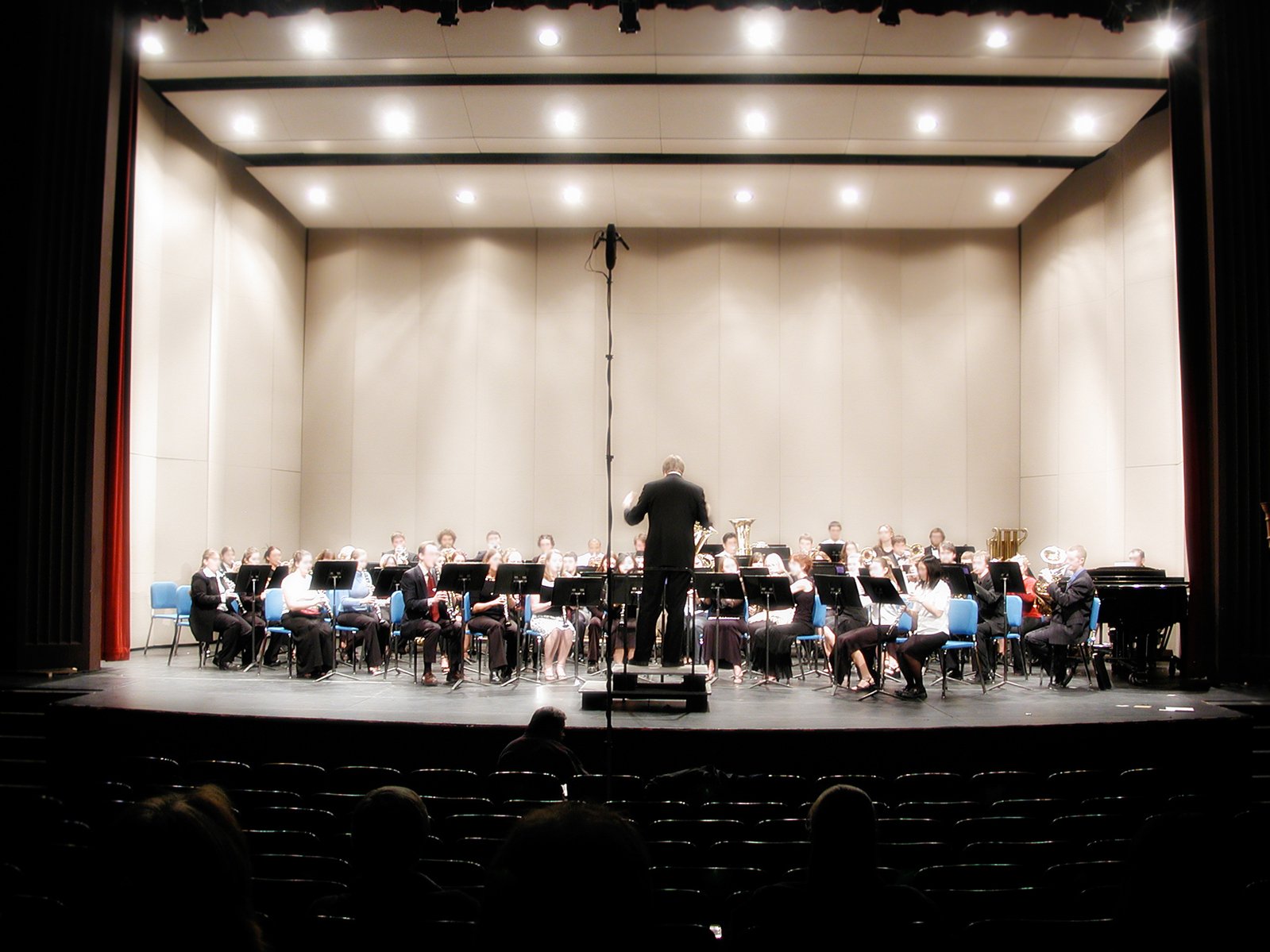
What do the New York Philharmonic, the Los Angeles Dodgers, a steel mill, and a chapel of Benedictine nuns have in common?
Nothing more or less than the rise of the West from a backwater to a formerly dominant position in the world -- as well as her later decay.
There are any number of factors that contributed. For example, the specific shoreline of Western Europe, her broad continental shelf, the winds and currents of the Atlantic, the freedom of women, etc. No big thing in history has a single causal factor.
But what of the Philharmonic, Dodgers , et al.?
The playing of a symphony [or similar work] requires 1st and 2nd Violins, Violas, Cellos, Double Basses, Flutes, Clarinets, Oboes, Bassoons, French Horns, Trumpets, Trombones, and others each playing a different line of music and yet producing a coordinated whole. The Dodgers require pitchers, catchers, 1st basemen, 2nd basemen, shortstops, third basemen, and sundry outfielders each doing his own thing, yet playing together toward a harmonious outcome. The same can be said of the crane operators, puddlers, millwrights, chemists, metallurgists, inspectors, mechanics, accountants, salesmen, managers, et al. who comprise the steel mill; not to mention the sundry voices that comprise a choir.
A key invention of medieval Christendom was polyphony, in which several voices in a choir sang different lines which combined harmoniously and contrapuntally into a whole. This mentality informed the newfangled "corporate persons," like universities and guilds, which also featured different people doing different things that combined into a whole. The modern corporation is an example of such communal enterprise. So s an orchestra or a team sport. Teamwork and coordinated disparate roles were a key factor in the rise
of the West. It's one of the reasons, the West entered the middle ages a
follower but emerged as a leader.
Other cultures were quite adept at top-down, not so accomplished at bottom-up. An Indian raga played on the sitar is a masterpiece of virtuosity. The melodic lines are complex and the development subtle and intricate; but the only second voice is that of the rhythm beat of the tabla, and that is more like an accompanist than a colleague. There were no orchestras in India -- or in China, Japan, or the House of Submission. There were no corporations. Team sports like polo were more like a bunch of guys all trying to do the same thing than a variety of different roles all trying to do different things, but in a coordinated manner. Likewise, communal singing is not polyphonic if everyone is trying to sing the same melody.
As the rest of the world picked up on corporate effort, they began also to excel. One finds orchestras everywhere. Japan fields excellent baseball teams; India, outstanding cricket teams. Japan organized world-class industrial corporations; India has begun to do so now that the "red tape Raj" has been trimmed back.
But of late, Western music has been subsiding into noise. After a polyphonic heyday that gave us the Mmas and the Papas in popular tunes, the blending of multiple voices has shed first counterpoint, then harmony, and finally melody, so that we are left with mere rhythm. The coordination of disparate voices in parliaments and congresses has faded into a search for a Leader who, like the One Man of China, the rajah or the emir, or the Emperor of Rome, can guide us out of our troubles. We have begun to put our faith into autocracy rather than group effort.