Showing posts with label science. Show all posts

Thursday, June 20, 2019

Potpourri

Yes, sports fans! It's tabclearingday, when the gallimaufrey of tabs accumulating on the TOFian browser gets blown off with short shrift.

1. Quotes of the Day

a) Our [religion] is assuredly the most ridiculous, the most absurd and the most bloody religion which has ever infected this world. Your Majesty will do the human race an eternal service by extirpating this infamous superstition, I do not say among the rabble, who are not worthy of being enlightened and who are apt for every yoke; I say among honest people, among men who think, among those who wish to think.
-- Voltaire, Letter to Friedrich II, k.von Preussen
b) The clergy successfully preached the doctrines of patience and pusillanimity; the active virtues of society were discouraged; and the last remains of military spirit were buried in the cloister: a large portion of public and private wealth was consecrated to the specious demands of charity and devotion; and the soldiers’ pay was lavished on the useless multitudes of both sexes who could only plead the merits of abstinence and chastity.
-- Edward Gibbon, Decline and Fall, ch.38.

And how will the New Republic treat the inferior races? How will it deal with . . . those swarms of black, and brown, and dirty-white, and yellow people, who do not come into the new needs of efficiency? Well, the world is a world, and not a charitable institution, and I take it they will have to go. . . . And the ethical system of these men of the New Republic, the ethical system which will dominate the world state, will be shaped primarily to favor the procreation of what is fine and efficient and beautiful in humanity — beautiful and strong bodies, clear and powerful minds. . . . And the method that nature has followed hitherto in the shaping of the world, whereby weakness was prevented from propagating weakness . . . is death. . . . The men of the New Republic . . . will have an ideal that will make the killing worth the while.
-- H.G. Wells  The New Republic

 Voltaire pointed out that enlightenment was only for the enlightened, like himself; not for the basket of deplorables unworthy rabble. More than a tough of Hegel, there.

Gibbon was evidently a proto-Nietzsche, based on what he praised and what he disparaged. Patience, chastity, charity... Boo. Military spirit, Yay!

Neither of them yet had the vocabulary to evoke the Superman or the Woke. but the thought-cliche of the special aristocracy -- the Enlightened, the Illuminati, the Brights, the Vanguard -- runs through it. As for the rest of us, remember that phrase "apt for every yoke" and bend over to welcome your new masters.  In the end, though, the Morlocks eat the Eloi. (Remember, Wells thought that a bad thing; but I hear they taste like chicken.)

2. Food for Thought
Speaking of chicken. At the 2018 Annual Meeting of the Medieval Academy of America, the Middle Ages were roundly defended from the Dead White Males like Voltaire and Gibbon, who had relegated them to the 'midddle' between the enlightened ancients and the enlightened 18th cent. (i.e., themselves). However, that defense was mounted without a single reference to Christianity, let alone to Catholicism; so it appears the likes of Voltaire and Gibbon have been victorious after all.


But the vanishing of theology from the schools has not led to 'no theology,' but to 'bad theology,' and as Chesterton noted, the man who believes in nothing will eventually believe in anything. Or as Midgley said, those who claim no metaphysics are usually enslaved to some outdated form of it. It is no surprise then that the absence of virtues so derogated by Gibbon -- charity, above all -- has ended with road rage, school shootings, and campus riots against heretical speakers. The surprise rather is that no one has remarked that these things are connected.

3. And I Awoke and Found Me Here on the Cold Hill’s Side

An essay on the destructiveness and irrationality of the latest fascination to sweep the intelligentsia, reminding one of the Tiptree story,


4. Intension and Extension

What a term contains differs from what it covers. Siris considers the matter here, using the term "teacher" to show the difference. It might be that much of the current rancor in the public square stems from a failure to appreciate the distinction.

5. Blind Spot

A couple of physicists and a philosopher walk into a bar.... and notice that science has a great big blind spot. There are things that it just cannot see. Just as a person who relies exclusively on a metal detector will never find wood.


6. Speaking of Physics

Sabine Hossenfelder wonders at the reasons there has been nothing really new in basic physics since the great paradigm shift of the turn of the last century. It's all i-dotting and t-crossing. So far, the Standard Model stands strong!

7. What to Do with Surprise Medical Bills.

The Manhattan Contrarian says: Don't pay 'em.

8. Come Out, Come Out, Wherever You Are.

Several of the swarm of Democrats vying to challenge the Donald have promised to implement Health Care For All, for example by extending Medicare to everyone.  TOF thought this had been settled by the Affordable Care Act, but no one seems to want to mention it any more. ACA is in hiding. This Act, in the spirit of all slapdash government 'programs' has made health insurance less affordable, hurting the poor most of all, as usual, The Manhattan Contrarian notes that these new proposals will work for sure, no foolin'.

Wednesday, July 6, 2016

OK, Put it Back! Right Now!

Dr. Robert Scherrer at Cosmic Yarns makes an interesting observation about a lack observation....


Suppose there were amazingly advanced alien civilizations out there -- aliens capable of harnessing the energy of entire galaxies. (These are the Kardashev Type III civilizations). Surely such a civilization would easy to spot?
I've noticed a surprisingly large number of serious astronomy papers on this subject recently. As you might imagine, nobody has seen any evidence for such a civilization -- if they had seen something, you probably would have heard about it by now. But here's a fun new idea from Beatriz Villarroel and collaborators at Uppsala University: searching for disappearing stars. These scientists compared two surveys of sky -- one from the US Naval Observatory, based on observations of the sky between 1950 and 1999, and the more recent Sloan Digital Sky Survey. They examined 10 million objects, and found exactly one object in the first survey that seems to have disappeared in the later survey.

Does this mean that an advanced civilization has caused a star to vanish?

Probably not, and the authors of the paper don't make such a claim. Maybe the star was simply much brighter in the past and then dimmed rapidly. On the other hand, it's a rather intriguing observation.... 

You might expect that the USNO survey might have missed objects picked up by the Sloan; but this says that something spotted previously hasn't been seen again. Where'd it go? Has it been enclosed in a Dyson Sphere since the last time it was spotted? Or perhaps it was the exhaust of a starship that is now  coasting? 

Saturday, April 25, 2015

Underdetermination

One hears much that scientific theories are underdetermined; that through any finite collection of facts, one may draws countless explanatory theories. The existence of at least four or five theories of quantum mechanics to explain the same body of facts is an illustration, even if one of them is more popular than the others.¹ ² The Copenhagen Interpretation insists that all potencies exist until the particle is actualized by measurement. The equations don't tell us how a particle’s properties "solidify" at that moment of measurement, or "how reality picks which form to take. But the calculations work."

Although in matters of religion the existence of multiple interpretations is said to prove that there is no "there" there, it does not do so in matters of Science!™ because Invisible Sky Fairies! It is simply in the nature of theories that there can always be more than one for any given set of data. Recall how, at the dawn of the modern age there were multiple theories explaining the motions of the heavens, with the Ptolemaic theory being the most popular, the "consensus science." The calculations worked, but they did not tell us how the planets moved as they did.

But "the quanta are a hopeless mess" and it is useful to have a more homey example of underdetermination. Detective fiction is good at this: maintaining multiple theories of whodunnit until the end, when a new fact or a new arrangement of the facts collapses the potencies into an actual. The new fact may be the discovery of stellar aberration or the Afshar Experiment.

But here is an example of how a fact may support multiple theories:

Matt Briggs, the Statistician to the Stars, recently noted a kerfuffle in the rarefied world of chess.
Chess Grandmaster Nigel Short caused a stink, reaching oooo-weee! but not quite burn-him! levels, when he said that men and women are different and that men are better at chess than women.

Female chess player Amanda Ross said in response that, it is “incredibly damaging when someone so respected basically endorses sexism”. Sexism is when a disparity of any kind exists between males and females.
Let's call these the Short Theory and the Ross Theory.
So let us appeal to the Facts! In a list of living Grandmasters, there are:
  • 1413 men 
  • 33 women.
This fact supports Short's theory that men are better at chess.

It also supports Ross's theory that sexism in chess suppresses women's achievement.

This is why proponents of a theory are seldom swayed by the facts. Facts alone have no swaying power, since they will (and must) be interpreted in the light of some theory.


Notes:
1. Further confused by the fact that the mathematical formalism common to them all is also referred to broadly as "quantum theory." But "quantum theory" as such is not a theory. 
2. For the record, four that come trippingly to mind are:
a) Copenhagen (Bohr, Heisenberg), which reifies Aristotelian potencies until measurement collapses reality onto one of them.
b) Standing Wave (deBroglie, Bohm), in which the particle rides on the wave.
c) Many Worlds (Wheeler) in which all potencies are actualized, but in different worlds.
d) Transactional (Cramer) in which the wave travels backward as well as forward in time, thus reifying final cause.

Thursday, June 26, 2014

Muddling Through with Models

A few observations on climate models from some folks on the inside....

"Model Structural Uncertainty: Are GCMs the Best Tools?" Folks here may recollect comments regarding model structure uncertainty in an earlier post
The policy-driven imperative of climate prediction has resulted in the accumulation of power and authority around GCMs [global coupled atmosphere-ocean models], based on the promise of using GCMs to set emissions reduction targets and for regional predictions of climate change. Complexity of model representation has become a central normative principle in evaluating climate models, good science and policy utility. However, not only are GCMs resource-intensive and intractable, they are also characterized by over parameterization and inadequate attention to uncertainty. Apart from the divergence of climate model predictions from observations over the past two decades that are raising questions as to whether GCMs are over sensitive to CO2 forcing, the hope for useful regional predictions of climate change is unlikely to be realized based on the current path of model development. The advancement of climate science is arguably being slowed by the focus of resources on this one path of climate modeling.
-- Curry, Climate, etc.

the GCM is the numerical  solution of a complex but purely deterministic set of nonlinear partial differential equations over a defined spatiotemporal grid, and no attempt is made to introduce any quantification of uncertainty into its construction. [emph. added]

Reductionism argues that deterministic approaches to science and positivist views of causation are the appropriate methodologies for exploring complex, multivariate systems. The difficulty is that a successful reductionist explanation need not imply the possibility of a successful constructionist approach, i.e., one where the behavior of a complex system can be deduced from the fundamental reductionist understanding. Rather, large, complex systems may be better understood, and perhaps only understood, in terms of observed, emergent behavior. The practical implication is that there exist system behaviors and structures that are not amenable to explanation or prediction by reductionist methodologies. [emph. added]
-- Stephan Harrison and David Stainforth, "Predicting Climate Change: Lessons from Reductionism, Emergence and the Past." (2009)
When climate modelers work to characterize uncertainties in their model, they focus on initial condition uncertainty and parametric (parameter and parameterization) uncertainty. 
[And this is why the model results are always stated with greater certainty than actually justified. Uncertainty in the parameters will always be less than uncertainty in the actual predictions.]

Wednesday, June 11, 2014

America's Next Top Model -- Part VI


Now that we know how to measure our Xs (and Ys) we need to select units on which we will make the measurements not only for the model baseline and calibration, but also for the input data used in running the model later.

The Eighth Uncertainty: Cheery Picking

On rare occasions, we can measure every item in the population, but more usually, we have to select a sample. This is the third pitfall in data collection. Sampling error and sampling bias could be the subject of entire books -- and have been! TOF's favorite for non-statisticians is A Sampler on Sampling, by Bill Williams, a man whose middle name he has always wanted to know. Other books of a more grimly technical nature include Deming, Sample Design in Business Research (Wiley Classics, 1990), Cochran, Sampling Techniques (Wiley, 1977), and Deming (again), Some Theory of Sampling (Wiley, 1950). TOF directs Faithful Reader's attention toward "sources of error in sampling surveys" and similar topics.

Sunday, May 25, 2014

America's Next Top Model -- Part V


Now, where is that equation hiding?
Now that we have a lovely bunch of Xs, we need to knit them into equations, and thus introduce entire new species of uncertainty. This is done in two basic ways:
  1. pulling the equation out of our vast fund of scientificalistic knowledge.
  2. pulling the equation out of the back pocket of our jeans, or somewhere close by.
In the continuum of knowledge, the most certain knowledge is mathematical, for once the reasoning is grasped, the conclusions follow with a determinism that even the most determined materialist cannot match. Physics being so highly mathematized -- to the extent that some physicists have fallen prey to idealism and regard the mathematics as the "real" world and the empirical world as something of a nuisance -- physical knowledge is sometimes regarded also as deterministic. This was Descartes' explicit program: by mathematizing the physics he hoped to prove physical truths by demonstrating corresponding mathematical truths.(*) Although, since the physical world never quite conforms to the mathematical model (especially at the margins) that a mathematical model has a term in it does not obligate the natural world to go along with the gag. (Can we say "epicycle"?) 
(*) Descartes' program. In the meantime, mathematicians have latterly found that they can't even prove everything in mathematics... Damn!

Tuesday, April 29, 2014

America's Next Top Model -- Part IV


Ruminations
This is a continuation of ruminations on the use and understanding of models that began with Part I and continued (as you might suspect) through Part II and Part III to reach this Part IV. One can only wonder at what might come next.

In partes priores, we learned that as science proceeded from matters of organized simplicity (a few elements connected one to another) to disorganized complexity (many elements acting randomly) to organized complexity (many elements organized into patterns), the scientific approach progressed from mathematics (e.g., Boyle's Law) to statistics (e.g., thermodynamics) to models (e.g., general climate models). As it did our understanding of the phenomena decreased. It is easy to understand:

less easy to understand:
and nearly impossible to understand complex nondeterministic models having millions of degrees of freedom.  For example, says Judy Curry:
if a model is producing shortwave surface radiation fluxes that are substantially biased relative to observations, it is impossible to determine whether the error arises from the radiative transfer model, incoming solar radiation at the top of the atmosphere, concentrations of the gases that absorb shortwave radiation, physical and chemical properties of the aerosols in the model, morphological and microphysical properties of the clouds, convective parametrization that influences the distribution of water vapor and clouds, and/or characterization of surface reflectivity.

Friday, March 28, 2014

America's Next Top Model -- Part III

Top Models.  Let's sexualize kids.
What could possibly go wrong?
Resuming our discussion of modeling from Part I and Part II...

Recall that in his Nobel laureate speech, "The Pretence of Knowledge," Friedrich August von Hayek (the father, we may suppose, of Freddy September) pointed to organized complexity as a major issue in economics and similar fields:
Organized complexity... means that the character of the structures showing it depends not only on the properties of the individual elements of which they are composed, and the relative frequency with which they occur, but also on the manner in which the individual elements are connected with each other. In the explanation of the working of such structures we can for this reason not replace the information about the individual elements by statistical information, but require full information about each element if from our theory we are to derive specific predictions about individual events. Without such specific information about the individual elements we shall be confined to what on another occasion I have called mere pattern predictions - predictions of some of the general attributes of the structures that will form themselves, but not containing specific statements about the individual elements of which the structures will be made up. [Emph. added]
In classical thought, the part that depends on "the properties of the individual elements of which they are composed" is the material cause, a/k/a "reductionism." (The term 'matter' means simply the elements of which a thing is composed. Bricks are the matter of a wall.)

The part that depends on "the manner in which the individual elements are connected with each other" is the formal cause. In modern parlance this is sometimes called "emergent properties" because the whole system has the property while the individual elements do not.

In other words, it's the form (pattern, organization) that is the key to intelligibility. Given a set of interconnected elements X1, X2,... Xn, we cannot legitimately replace the specific Xs with X-bar as we may in cases of disorganized complexity. At best we would obtain only statistical conclusions about the entire system -- as we do in fact regarding quantum mechanics.

When there are only a few elements in the system, the scientist introduces simplifications: infinite Euclidean space, ideal gasses, perfectly elastic collisions, and the like. Arrhenius' law relating CO2 to temperature assumes the atmosphere extends to infinity. TOF read a joke - he has forgotten where - about using models to predict the SuperBowl, which is a sort of football game sometimes (but not this past year) played by two teams. In the punchline, the physicist says, "consider each player to be a perfectly elastic sphere on an infinite Euclidean field..." Mathematics tends to become ornery when bumping up against boundary values* and it is precisely at the extremes where many models pop their suspenders.
(*) boundary values. TOF has his old college text, Fourier Series and Boundary Value Problems, by Ruel Churchill, which he will someday nerve himself to re-read.

Wednesday, March 5, 2014

America's Next Top Model -- Part II

PREVIOUSLY, WE DISCUSSED the emergence during and after WW2 of model-building as a means for dealing with organized complexity, a distinction, first made in 1948 by Dr. Warren Weaver:
  1. Organized simplicity. Systems with few elements. Analyzed mathematically.
  2. Disorganized complexity. Systems with many elements acting "randomly." Analyzed statistically.
  3. Organized complexity. Systems with many interconnected elements. Analyzed with operations research/model-building methods.
George Box said that "all models are wrong" because of the uncertainties to which models are subject. Honest modelers are obligated to assess these uncertainties and to inform their clients of them. Alas, too few do, and models are presented, understood, and press-released as being more certain than they actually are.
Joe Martino tells TOF that "One of the most horrible examples I ever encountered was the use of a Cobb-Douglas Production Function to predict the effectiveness of bombing the Ho Chi Minh trail. When I first saw the model it fairly screamed 'wrong!' But the people who put it together saw nothing wrong with it."
And yet, these things have so many pretty equations they seem like they damn well ought to work. And they do, in some cases. Kingsbury Bearings has a model for hydraulic bearings that works well in predicting the performance of new bearing designs.* So what's the problem?  Operationally, what is the difference between a model that is "useful" and one that is "true"?

(*) hydraulic bearings. TOF digresses. At the entrance to the Kingsbury plant is a placard honoring the Kingsbury Bearing installed in Holtville #5 in 1912. TOF inquired of his hosts in the 1980s when he spent some time with them: "How long did it last?" "We don't know yet," was the response. "It's still running." As of 2008, Wikipedia tells us, it was still running with an estimated TTF of 1300 years. That's craftsmanship! It's also a system whose elements and interactions are pretty well understood.

Tuesday, February 4, 2014

America's Next Top Model -- Part I

Let's talk about models.


 No, no, no. Not that kind.  The interesting and exciting kind. Mathematical and statistical models!

TOF can hear your pulses quickening all the way up here in his Fortress of Solitude.  Tell us more, TOF! (he hears you cry).

But you knew that the moretelling was going to happen, didn't you.

Tuesday, November 26, 2013

This is Kool

STEREO [Solar Terrestrial Relations Observatory] is a pair of telescopes parked in the L4 and L5 solar Lagrange points.  These are along Earth orbit about 93 million miles ahead and behind us.

STEREO-A's Heliospheric Imager captured Comet ISON tracking left to right as it heads toward its close encounter of the hot kind: it will graze the sun on Thursday.

The video covers Nov. 20 to Nov. 22, 2013.

The smaller moving body seen in the middle ground is Comet Encke. The sun is off-stage right.  The instrument visualizes the solar wind, which is also kool.


BTW, Mercury is not farther from the Sun than Earth.  It's the perspective.  Here is the position of the two STEREO satelites as of 27 Nov 2013.  Put yourself at A (the one Ahead of the Earth and look back toward the Earth and you will see why Mercury looks farther from the Sun.


Friday, October 11, 2013

Political Book Reviews

ON OF THOSE THINGS that TOF finds ever perplexing is the tendency of some politically committed readers to commit politics on books they read.  TOF knew such folks in the 60s.  They would wool over pop songs, examining their lyrics closely for heterodox opinions, whether of satanic influences or of less-than-leftward sentiments.  The story is that at the 1965 Newport Folk Festival, Pete Seeger almost took an axe to the cable when Dylan came on, not because of the electronic backup, but because Dylan was no longer doing political songs. 

Well, it's a New Age, Faithful Reader.  While browsing through customer reviews of On the Razor's Edge on Amazon.com TOF discovered the following nugget by Gregory N. Hullender:

Tuesday, August 13, 2013

Shrouded in Mystery


Not an actual photograph of Last Supper!
Christ: All right, who made this mess on the table?
Apostles: Not me!  Surely not I, Lord!
Judas: Food fight!

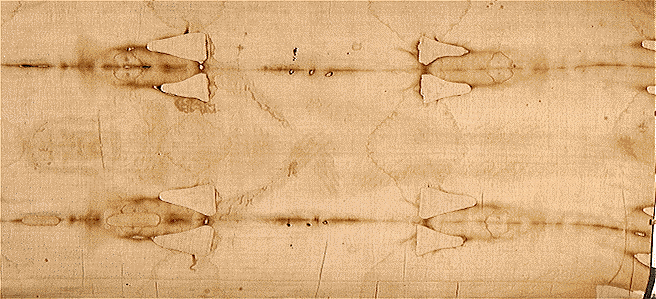
One of those things that periodically shows up on one message board or another is the ever-popular subject of the Shroud of Turin.  It is one of those matters regarded as a done deal in certain quarters, though the deal done differs from one quarter to another.  For some, it has been shown -- usually by Science!™ -- to be a medieval hoax perpetrated by preternaturally clever medieval hoaxers.  For others, it has been shown -- usually by some nit-picking of those Science results -- to be the burial shroud of Christ.  A small cottage industry has grown up around it: the Shroudies. 

Coming down squarely in the We-don't-know camp is of course the Catholic Church.  She points out quite reasonably that an object need not be factual to be useful in focusing the mind on veneration.  (No one supposes DaVinci's The Last Supper to be a photograph of the actual event, but it is often found in altarpieces and the like.)  But neither is she prepared to dismiss the Shroud tout court.  Even if it is a weird work of art, it is still a valuable and important indicator of a lost technology.

John Walsh in The Shroud (Random House, 1963) wrote:
"The Shroud of Turin is either the most awesome and instructive relic of Jesus Christ in existence... or it is one of the most ingenious, most unbelievably clever, products of the human mind and hand on record."
But there are, of course, other logical possibilities.
  • It is neither a relic nor a clever product, but simply a natural occurrence.
  • It really is a first century burial cloth, but it is Yussuf Schmoe, crucified in AD 80, not Jesus Christ.
  • It really is the burial cloth of Jesus, but it evidences only his death, not his resurrection.
And of course, that the Shroud may have a train of material causes that account for it does not preclude its being miraculous. The word for "miracle" is simply mirabilium, which means "marvel." 
"We marvel at something when, seeing an effect, we do not know the cause.  And since one and the same cause is at times known to certain people and not to others, it happens that some marvel and some do not."       -- St. Thomas Aquinas. Contra gentiles
Is the production of a rainbow by double-refraction of sunlight through water droplets, as described by Bishop Theodoric of Freiburg in the 13th cent., any less marvelous than some mumbo-jumbo involving the goddess Iris?  Catholic and Orthodox Christians can get away with this since their notion of God as primary cause does not preclude secondary (or "intrumental") causes.  This is all much more clear in Latin, which possesses an instrumental case and in which no one could utter such absurdities as "I flew to Los Angeles," except perhaps a rational bird.  But we digress.

Shroud image at this link may be inspected in close-up zooms
A 1983 paper by archeologist William Meacham summarized the Shroud situation as follows:
From its first recorded exhibition in France in 1357, this cloth has been the object of mass veneration, on the one hand, and scorn from a number of learned clerics and freethinkers, on the other. Appearing as it did in an age of unparalleled relic-mongering and forgery and, if genuine, lacking documentation of its whereabouts for 1,300 years, the Shroud would certainly have long ago been consigned to the ranks of spurious relics (along with several other shrouds with similar claims) were it not for the extraordinary image it bears.
--- "The Authentication of the Turin Shroud:
An Issue in Archaeological Epistemology." 
Current Anthropology
, v.24 No.3 (June 1983)
The Face of Jaen Cathedral
is supposedly a copy of the
medieval Veronica Veil.  Clearly
a painting in medieval style
.
The only "other" shroud mentioned in the article is the Cadouin Shroud.  It is a monument to the capacity of bumpkin Frankish knights to be taken in by Middle Eastern sharpies that they could believe a Fatimid era shawl with Qur'anic inscriptions was the burial shroud of Christ.  The Cadouin Shroud bears no image, so although clearly not genuine, it does indicate that medievals had no a priori expectation that such a shroud would have an image on it. 

There are also a number of other art works purporting to be copied from the "Veronica Veil" kept in the Vatican; but they are self-proclaimed as copies, and are clearly paintings with the stylized features of the art of the time. The only close up inspection of what is supposed to be the original Veronica Veil in 1907 described it as "a square piece of light coloured material, somewhat faded through age, which bear two faint rust-brown stains, connected one to the other." 

However, from the copies made of the original image, we can get an idea what an artist of that era would consider a good Face-O'-Jesus.  It is hardly the Modern Ages concept of representationalism in art!  The face is stylized and set in a metal matting cut frame the face.  The three points of beard and hair at the bottom is a common feature of all the copies, so the original was likely the same: an image within an opening. 

This essay and the next make heavy, if tentative, use of a number of on-line resourses, which will be linked here and there, and summarized at the end. 

Wednesday, July 24, 2013

Unrelated Items

Bending the Aether

Space is full of lines.
NASA has discovered that Einstein was right, again. 
Time and space, according to Einstein's theories of relativity, are woven together, forming a four-dimensional fabric called "space-time." The mass of Earth dimples this fabric, much like a heavy person sitting in the middle of a trampoline. Gravity, says Einstein, is simply the motion of objects following the curvaceous [sic] lines of the dimple. 
This is what Einstein in his 1920 speech in Leyden called the "relativistic ether." 
If Earth were stationary, that would be the end of the story. But Earth is not stationary. Our planet spins, and the spin should twist the dimple, slightly, pulling it around into a 4-dimensional swirl. This is what GP-B went to space in 2004 to check. 
There is something that seems vaguely Michelson-Hale-ish about the business.
Put a spinning gyroscope into orbit around the Earth, with the spin axis pointed toward some distant star as a fixed reference point. Free from external forces, the gyroscope's axis should continue pointing at the star--forever. But if space is twisted, the direction of the gyroscope's axis should drift over time. By noting this change in direction relative to the star, the twists of space-time could be measured. 
So apparently the aether does spin with the earth, which may be why the Michelson-Morley experiment failed. 

Uncertainty About Uncertainty

Some physicists are questioning the ontological status of the Uncertainty Principle and questioning the received wisdom of Bohr and Heisenberg.  Now, Wolfgang Smith once wrote that a physical theory that results in singularities and paradoxes is probably a sign of a faulty metaphysics behind the theory, but one does wonder if the Name of Prof. Callender is whispered in the same halls as those of Bohr and Heisenberg. 

Away with that Pagan Nonsense!

Last week (19 July) was the feast of St. Macrina the Younger, described by Brandon at Siris.  On her deathbed, Macrina maintained a Platonic dialogue with her kid brother St. Gregory of Nyssa.  Some folks in that day and age were saying that because automata - clever machines devised for the emperor - seemed to work on their own, there was no need for the God hypothesis.  Macrina showed him how automata supported the argument for God.  That's right.  Those folks have always been with us. 


Thursday, July 11, 2013

The A-Team

A is for Astronomy


When TOF was just a whippersnapper, he had a telescope.  Didn't everyone?  It was, if memory serves, a 2" reflector and with it, TOF discovered the mountains and craters on the Moon, the moons of Jupiter, the rings of Saturn, and one memorable night Uranus (still in those benighted times pronounced scatalogically).  Oh, and Mars was a distinct disc, though his moons were invisible.  Single stars were revealed as doubles; the Milky Way comprised uncounted individual stars.  The night sky was very dark, and hereabouts still largely is. 

Harriot, who could have been
Galileo if he had only
published
his freaking notebook!
We have to learn to see.  What the eye takes in is two-dimensional: the surface of the retina.  Depth is something we make up.  TOF, who had learned from his readings that there were indeed mountains on the Moon, saw them instantly and in stunning clarity; but Harriot -- who saw them before Galileo and sketched them in his notebook -- did not immediately recognize them as such.  Galileo, who had trained as an artist and was accustomed to see three dimensions in a two-dimensional field, did and got famous.  The telescopes used by Harriot and Galileo (and Scheiner and Grassi and Marius and the Fabricii and...) gave low resolution, a restricted field, and (due to impurities in 17th century glassmaking) a slightly greenish tinge.  (Hence, the old saw about the moon being made of green cheese.  That's how it looked.)  And they were refractor telescopes with images that were at first upside down.  (It was not mere bull-headedness that led many natural philosophers to wonder is telescopes gave true images of reality.)  Galileo could not even see the entire Moon at once, just slices of it, and he had to prove that the light and dark spots resolved as mountains (and craters).  So a tip of the hat to the Tuscan mathematicus

A while back, Br. Guy Consolmagno blogged a photograph of a 1957 astronomy conference at the Vatican observatory.  TOF thought his Faithful Reader would find the photo striking.
Here is the person-locator:
And Br. Guy researched the names:
a. Daniel O'Connell (1896 - 1982) director of the Vatican Observatory 1952 - 1970
b. Giuseppi Armellini (1887 - 1958) Studied planetary formation, head of Campidoglio/Monte Mario observatory
c. Walter Baade: (1893-1960) By observing stars in the Andromeda Galaxy he invented our present Population I and II system; his observations of Cepheid variables there recalibrated our understanding of the size of the universe
d. Adriaan Blaauw (1914 -2010) Founder and first director of European Southern Observatory; studied high velocity stars
e. Hermann Brück (1905 - 2000) Refounder of Dunksink Observatory, Ireland; Astronomer Royal for Scotland 1957 - 1975. (He fled Nazi Germany to work at the Vatican Observatory in 1936)
f. Daniel Chalonge (1895 - 1977) A founder of the Institut d'astrophysique de Paris, studied stellar photometry, inventor of the Chalonge microphotometer
g. William Fowler: (1911-1995) Won the Nobel prize in Physics in 1983 for his theories of how elements are made by nuclear reactions inside stars
h. Otto Heckmann (1901 - 1983) First director of the European Southern Observatory; expert in cosmology
i. George Herbig: (1920 -  ) Discoverer of "Herbig-Haro" objects, a particular type of young star
j. Fred Hoyle: (1915-2001) Worked with Fowler on theories of how elements are formed in stars; invented the term “Big Bang”
l. Georges Lemaître: (1894-1966) In 1928, Fr. Lemaître proposed the cosmological theory that has come to be known as the “Big Bang”
m. Bertil Lindblad: (1895-1965) Explained certain orbital resonances (“Lindblad resonances”) and details of the rotation of galaxies; such work has ultimately led to the detection of “dark matter”
n. William Morgan (1906-1994) Developed stellar classification system, proved the existence of spiral arms in the Milky Way
o. Jason Nassau (1893 - 1965) Expert in galactic structure.
p. Jan Oort (1900 - 1992) Determined the existence of a distant cloud of comets now called the Oort Cloud
q. Ed Salpeter: (1924-2008) Applied nuclear theory to the formation of elements in stars; described how black holes provide the energy of active galactic nuclei
r. Allan Sandage (1926 - 2010) First accurate measurement of Hubble Constant, discoverer of quasars
s. Martin Schwarzschild: (1912-1997) The Scharzschild radius derived by him indicates the “event horizon” of a Black Hole
t. Lyman Spitzer: (1914-1997) An expert on interstellar dust, he first proposed telescopes in space; the Spitzer Space Telescope is named for him
u. Bengt Strömgren: (1908-1987) Determined relative abundances of helium and other elements in stars; devised the Strömgren system of photometric filters
v. A. David Thackeray (1910 - 1978) Estimated size and age of universe via variables in Magellanic Clouds; discovered Thackeray's Globules (stellar formation region)
w. Patrick Treanor (1920 - 1978) Director of the Vatican Observatory, 1970-1978
x. Pietro Salviucci (1936 - 1973) Chancellor of the Pontifical Academy of Sciences
z. V. Préobrajenski, secretary of the Pontifical Adacemy
A fascinating number of these scientists are "names" -- e.g. Schwarzschild and his radius, Oort and his cloud, Lindblad and his resonances, Herbig and his -Haro objects, Chalonge and his microphotometer, Thackeray and his Globules, Strömgren and his photometric filters -- or the progenitor of an important feature of modern astronomy -- e.g., Lemaître and his Big Bang, Baade and Population I & II, Fowler and Hoyle and their stellar fusion producing the elements, Morgan and his stellar classification system (OBAFGKM) -- or have had things named for him -- e.g., Spitzer and his eponymous space telescope. 

This was indeed the A-Team of astronomy in their day. 

Saturday, July 6, 2013

Twinkle, Twinkle


It seems that the rate of supernova occurrence (black line) is pretty much a dead match for biodiversity -- the normalized marine invertebrate genera count (blue line).  The gray is the error band around the biodiversity count. 


When Sagan said we were made of star-stuff, he had only half the picture.  Apparently, the stars really do affect life on earth.  The Permian extinction falls right in:
Svensmark notes that the Late Permian saw the largest fall in the local supernova rate seen in the past 500 million years. This was when the Solar System had left the hyperactive Norma Arm of the Milky Way Galaxy behind it and entered the quiet space beyond.
Through a variety of mechanisms, too few supernovae resulted in warmer air, reduced circulation, poor nutrient mixing, ending with a shortage of oxygen in the atmosphere.  Nearly all life on earth went extinct.
But once upon a time an abundance of nearby supernovae chilled the earth so badly it kicked into Snowball Earth.   So, Goldilocks, human life arose in a period of "just right" insofar as supernovae are concerned. 


Friday, June 21, 2013

If the Only Tool You Allow Yourself is a Hammer...

...you'll have a hard time painting your ceramics. 

Ed Feser, over on his philosophy blog, makes the following useful observation:
[T]he problem [of consciousness] is a problem in principle, and ...it isn’t going to be solved by further application of existing methods precisely because the problem is generated by the application of existing methods.  ... [T]he problem of consciousness is a result of the move Galileo, Descartes, and Co. made of taking color, sound, heat, cold, and other sensory qualities out of the material world and relocating them in the mind’s experience of that world.  Having thus made matter essentially devoid of qualia and qualia essentially immaterial, there is no way on this picture of things you are ever going to “naturalize” qualia.  You are stuck either with a Cartesian-style dualism ..., or with an incoherent eliminativism.  (Incoherent because the qualitative experience whose existence you will be denying in the name of science forms the evidential base of science -- a problem Democritus and Schrödinger saw but Dennett does not, pushing ... his usual line that consciousness is an “illusion.”)  The only true solution to the problem is to see that the post-Cartesian conception of matter does not capture the entirety of its real nature in the first place, but is merely a useful simplification.
Or to put it another way, materialism does not even completely account for matter. 

There's Another Cow Off the Ice


Monday, May 13, 2013

Bats in the Belfrey

Not a bird
Every now and then one stumbles upon comments about how the Stoopid Bible™, written by Bronze-Age [sic] goat-herders who didn't know Jack, somewhere or other seems to include bats among birds.  How droll!  Those sillies! 

Now when sometimes it is pointed out that the New Guinea highlanders likewise classify bats as birds, they will oft hesitate, reluctant to refer to certified Victims of Indonesian Western Imperialism as stoopid, but then, after a quick look around the room, will lower their voices and crow that this proves their very point.  Even though they did not have the Stoopid Bible™, the New Guineans were somehow also Backward and Very Confused about the True Nature of Birds.  This latter is also very droll, since these same people are often at great pains to deny the very existence of natures. 

Saturday, March 30, 2013

Science in Drag

"...What a Drag it is to See You." 

That which is most perfected in aerodynamics, the maximum from which all aerodynamic designs take their being, is the Drag Equation, that than which nothing greater can be thought insofar as aerodynamics is concerned.  This equation, under certain realistic assumptions, equates the drag force, FD, with


ρ, the mass density of the fluid through which the object moves
A, the reference area
CD, the drag coefficient
v, the velocity of the object relative to the fluid
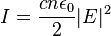
There is a certain beauty to this equation, TOF says redundantly.  Consider the equation for light intensity:

c, the speed of light in vacuum
n, the refractive index
ε_o, the vacuum permittivity

E, the complex amplitude of the electric field

A little thought reveals that the form of both equations is identical: one-half a constant times the square of a variable.  If we regard the three constants as one constant -- ρCDA = α, let's say -- the form reduces to ½αv², which is very like the formulae for

Sunday, December 9, 2012

Prometheus Awards: Read & Watch

 Hello Friends & Fans of Michael Flynn,       The Libertarian Futurist Society has made available the text of the acceptance speech Dad...