Showing posts with label modern mythology. Show all posts

Thursday, June 26, 2014

Muddling Through with Models

A few observations on climate models from some folks on the inside....

"Model Structural Uncertainty: Are GCMs the Best Tools?" Folks here may recollect comments regarding model structure uncertainty in an earlier post
The policy-driven imperative of climate prediction has resulted in the accumulation of power and authority around GCMs [global coupled atmosphere-ocean models], based on the promise of using GCMs to set emissions reduction targets and for regional predictions of climate change. Complexity of model representation has become a central normative principle in evaluating climate models, good science and policy utility. However, not only are GCMs resource-intensive and intractable, they are also characterized by over parameterization and inadequate attention to uncertainty. Apart from the divergence of climate model predictions from observations over the past two decades that are raising questions as to whether GCMs are over sensitive to CO2 forcing, the hope for useful regional predictions of climate change is unlikely to be realized based on the current path of model development. The advancement of climate science is arguably being slowed by the focus of resources on this one path of climate modeling.
-- Curry, Climate, etc.

the GCM is the numerical  solution of a complex but purely deterministic set of nonlinear partial differential equations over a defined spatiotemporal grid, and no attempt is made to introduce any quantification of uncertainty into its construction. [emph. added]

Reductionism argues that deterministic approaches to science and positivist views of causation are the appropriate methodologies for exploring complex, multivariate systems. The difficulty is that a successful reductionist explanation need not imply the possibility of a successful constructionist approach, i.e., one where the behavior of a complex system can be deduced from the fundamental reductionist understanding. Rather, large, complex systems may be better understood, and perhaps only understood, in terms of observed, emergent behavior. The practical implication is that there exist system behaviors and structures that are not amenable to explanation or prediction by reductionist methodologies. [emph. added]
-- Stephan Harrison and David Stainforth, "Predicting Climate Change: Lessons from Reductionism, Emergence and the Past." (2009)
When climate modelers work to characterize uncertainties in their model, they focus on initial condition uncertainty and parametric (parameter and parameterization) uncertainty. 
[And this is why the model results are always stated with greater certainty than actually justified. Uncertainty in the parameters will always be less than uncertainty in the actual predictions.]

Wednesday, June 11, 2014

America's Next Top Model -- Part VI


Now that we know how to measure our Xs (and Ys) we need to select units on which we will make the measurements not only for the model baseline and calibration, but also for the input data used in running the model later.

The Eighth Uncertainty: Cheery Picking

On rare occasions, we can measure every item in the population, but more usually, we have to select a sample. This is the third pitfall in data collection. Sampling error and sampling bias could be the subject of entire books -- and have been! TOF's favorite for non-statisticians is A Sampler on Sampling, by Bill Williams, a man whose middle name he has always wanted to know. Other books of a more grimly technical nature include Deming, Sample Design in Business Research (Wiley Classics, 1990), Cochran, Sampling Techniques (Wiley, 1977), and Deming (again), Some Theory of Sampling (Wiley, 1950). TOF directs Faithful Reader's attention toward "sources of error in sampling surveys" and similar topics.

Sunday, May 25, 2014

America's Next Top Model -- Part V


Now, where is that equation hiding?
Now that we have a lovely bunch of Xs, we need to knit them into equations, and thus introduce entire new species of uncertainty. This is done in two basic ways:
  1. pulling the equation out of our vast fund of scientificalistic knowledge.
  2. pulling the equation out of the back pocket of our jeans, or somewhere close by.
In the continuum of knowledge, the most certain knowledge is mathematical, for once the reasoning is grasped, the conclusions follow with a determinism that even the most determined materialist cannot match. Physics being so highly mathematized -- to the extent that some physicists have fallen prey to idealism and regard the mathematics as the "real" world and the empirical world as something of a nuisance -- physical knowledge is sometimes regarded also as deterministic. This was Descartes' explicit program: by mathematizing the physics he hoped to prove physical truths by demonstrating corresponding mathematical truths.(*) Although, since the physical world never quite conforms to the mathematical model (especially at the margins) that a mathematical model has a term in it does not obligate the natural world to go along with the gag. (Can we say "epicycle"?) 
(*) Descartes' program. In the meantime, mathematicians have latterly found that they can't even prove everything in mathematics... Damn!

Tuesday, April 29, 2014

America's Next Top Model -- Part IV


Ruminations
This is a continuation of ruminations on the use and understanding of models that began with Part I and continued (as you might suspect) through Part II and Part III to reach this Part IV. One can only wonder at what might come next.

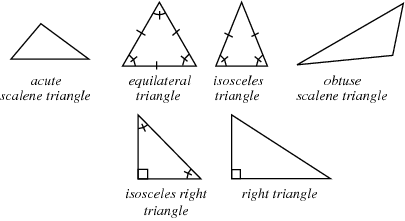
In partes priores, we learned that as science proceeded from matters of organized simplicity (a few elements connected one to another) to disorganized complexity (many elements acting randomly) to organized complexity (many elements organized into patterns), the scientific approach progressed from mathematics (e.g., Boyle's Law) to statistics (e.g., thermodynamics) to models (e.g., general climate models). As it did our understanding of the phenomena decreased. It is easy to understand:

less easy to understand:
and nearly impossible to understand complex nondeterministic models having millions of degrees of freedom.  For example, says Judy Curry:
if a model is producing shortwave surface radiation fluxes that are substantially biased relative to observations, it is impossible to determine whether the error arises from the radiative transfer model, incoming solar radiation at the top of the atmosphere, concentrations of the gases that absorb shortwave radiation, physical and chemical properties of the aerosols in the model, morphological and microphysical properties of the clouds, convective parametrization that influences the distribution of water vapor and clouds, and/or characterization of surface reflectivity.

Friday, March 28, 2014

America's Next Top Model -- Part III

Top Models.  Let's sexualize kids.
What could possibly go wrong?
Resuming our discussion of modeling from Part I and Part II...

Recall that in his Nobel laureate speech, "The Pretence of Knowledge," Friedrich August von Hayek (the father, we may suppose, of Freddy September) pointed to organized complexity as a major issue in economics and similar fields:
Organized complexity... means that the character of the structures showing it depends not only on the properties of the individual elements of which they are composed, and the relative frequency with which they occur, but also on the manner in which the individual elements are connected with each other. In the explanation of the working of such structures we can for this reason not replace the information about the individual elements by statistical information, but require full information about each element if from our theory we are to derive specific predictions about individual events. Without such specific information about the individual elements we shall be confined to what on another occasion I have called mere pattern predictions - predictions of some of the general attributes of the structures that will form themselves, but not containing specific statements about the individual elements of which the structures will be made up. [Emph. added]
In classical thought, the part that depends on "the properties of the individual elements of which they are composed" is the material cause, a/k/a "reductionism." (The term 'matter' means simply the elements of which a thing is composed. Bricks are the matter of a wall.)

The part that depends on "the manner in which the individual elements are connected with each other" is the formal cause. In modern parlance this is sometimes called "emergent properties" because the whole system has the property while the individual elements do not.

In other words, it's the form (pattern, organization) that is the key to intelligibility. Given a set of interconnected elements X1, X2,... Xn, we cannot legitimately replace the specific Xs with X-bar as we may in cases of disorganized complexity. At best we would obtain only statistical conclusions about the entire system -- as we do in fact regarding quantum mechanics.

When there are only a few elements in the system, the scientist introduces simplifications: infinite Euclidean space, ideal gasses, perfectly elastic collisions, and the like. Arrhenius' law relating CO2 to temperature assumes the atmosphere extends to infinity. TOF read a joke - he has forgotten where - about using models to predict the SuperBowl, which is a sort of football game sometimes (but not this past year) played by two teams. In the punchline, the physicist says, "consider each player to be a perfectly elastic sphere on an infinite Euclidean field..." Mathematics tends to become ornery when bumping up against boundary values* and it is precisely at the extremes where many models pop their suspenders.
(*) boundary values. TOF has his old college text, Fourier Series and Boundary Value Problems, by Ruel Churchill, which he will someday nerve himself to re-read.

Wednesday, March 5, 2014

America's Next Top Model -- Part II

PREVIOUSLY, WE DISCUSSED the emergence during and after WW2 of model-building as a means for dealing with organized complexity, a distinction, first made in 1948 by Dr. Warren Weaver:
  1. Organized simplicity. Systems with few elements. Analyzed mathematically.
  2. Disorganized complexity. Systems with many elements acting "randomly." Analyzed statistically.
  3. Organized complexity. Systems with many interconnected elements. Analyzed with operations research/model-building methods.
George Box said that "all models are wrong" because of the uncertainties to which models are subject. Honest modelers are obligated to assess these uncertainties and to inform their clients of them. Alas, too few do, and models are presented, understood, and press-released as being more certain than they actually are.
Joe Martino tells TOF that "One of the most horrible examples I ever encountered was the use of a Cobb-Douglas Production Function to predict the effectiveness of bombing the Ho Chi Minh trail. When I first saw the model it fairly screamed 'wrong!' But the people who put it together saw nothing wrong with it."
And yet, these things have so many pretty equations they seem like they damn well ought to work. And they do, in some cases. Kingsbury Bearings has a model for hydraulic bearings that works well in predicting the performance of new bearing designs.* So what's the problem?  Operationally, what is the difference between a model that is "useful" and one that is "true"?

(*) hydraulic bearings. TOF digresses. At the entrance to the Kingsbury plant is a placard honoring the Kingsbury Bearing installed in Holtville #5 in 1912. TOF inquired of his hosts in the 1980s when he spent some time with them: "How long did it last?" "We don't know yet," was the response. "It's still running." As of 2008, Wikipedia tells us, it was still running with an estimated TTF of 1300 years. That's craftsmanship! It's also a system whose elements and interactions are pretty well understood.

Tuesday, February 4, 2014

America's Next Top Model -- Part I

Let's talk about models.


 No, no, no. Not that kind.  The interesting and exciting kind. Mathematical and statistical models!

TOF can hear your pulses quickening all the way up here in his Fortress of Solitude.  Tell us more, TOF! (he hears you cry).

But you knew that the moretelling was going to happen, didn't you.

Monday, October 7, 2013

The Mean Streets of Old Alexandria

For those who might be interested, here are the links to an earlier chronicle dealing with the murder of Hypatia of Alexandria and the earlier destruction of the Serapeum.  In keeping with the 300-year rolling horizon, these events would have become mythic by the eighth century, if they were remembered at all outside of Egypt.  In the Latin West, there were at the time Other Concerns, like Alaric's Sack of Rome.  Contextual history has a way of breaking into any self-contained narrative. 

The posts were on the old Live Journal blog, yclept "The Auld Blogge"

The Mean Streets of Old Alexandria
Part II: When Hypatia Was a Little Girl
Part III: The Deconstruction of the Serapeum
Part IV: The Teachings of Hypatia
Part V: After Graduation: The Calm Before the Storm
Part VI: The Feud of Cyril and Orestes
Part VII: Murder Most Foul
Part VIII: The Aftermath
Part IX: The Sources

Saturday, October 5, 2013

9. The Great Ptolemaic Smackdown: From Plausible to Proven


Previously: Part 8, Trial and Error

From Plausible to Proven

 
The great dishonesty of Galileo’s Dialogue was to present a contest between the Copernican and Ptolemaic models.  By that time, both had been smacked down and the real contest was between the Tychonic/Ursine models and Kepler’s model, with the Ursine model being “ahead on points.”  Galileo did not mention either one. He regarded the Tychonic/Ursine models as unaesthetic and klunky.  He seems to have regarded Kepler's model, which came annexed to a physics in which the Sun put out a mysterious force that chivvied the planets about, as occultism.  Besides, he was committed to perfect Platonic circles, and Kepler had ellipticated them.  Boo. 

Galileo’s book “proved popular amongst literati who were not astronomers [and] who enjoyed his very obvious polemic writing skills; but contrary to popular opinion it didn’t play a significant role in the contemporary scientific discussion.”  (Christie, Galileo’s great bluff 2010)  One could even make an argument that Galileo managed to delay acceptance, although TOF does not do so.

What it came down to is that the issue would not be settled by astronomical mathematics, but by a new physics.

Wednesday, October 2, 2013

8. The Great Ptolemaic Smackdown: Trial and Error

Previously on the Smackdown

Galileo has just published his Magnum Opus. 


Several things have combined to create the perfect sh*tstorm.
  • The best minds from the time of Aristotle to the then-present had held the earth is stationary for sound empirical reasons.  
  • Because it was "settled science," the early Church Fathers had taken it for granted in their reading of the Scriptures, and so Patristic writings are full of rhetorical invocations of the stationary earth.  
  • While there is no dogmatic bar to reinterpreting scripture when some literal reading was known to be wrong, no one is about to do so for a merely plausible hypothesis.  Hence, heliocentrism must be proved beyond doubt.  
  • The Pope thinks that scientific theories can never be proved with certainty.  They are either useful as instruments for prediction or not.  (This is called instrumentalism.)  In particular, he does not think that the motion of the Earth can ever be proved contrary to plain experience.  In this, he is way ahead of Popper.  
  • The Pope had been an old friend of Galileo and had helped him out on several occasions.   
  • Galileo has taken the Pope's instrumentalist argument and placed it in the mouth of Simplicio, in the Conclusion, apparently assuming that having done so and having his characters nod in agreement to it, he has touched the right bases in satisfying the requirements.  
  • But when read after the entire rest of the Dialogue, it comes across as a fatuous objection made by a simpleton and the nodding agreement a patronizing pat on "the Simpleton's" head.  
  • Prince Cesi, who had the street smarts (and connections and lived in Rome) could have headed off the collision, but Cesi died before the manuscript was ready for publication.  
  • The plague has shut down travel and the post, so Galileo cannot either send or take the ms. to Rome and wants to publish it in Florence.  
  • Galileo has used Medici political muscle to force an imprimatur from Riccardi (or, more precisely, forced Riccardi to pass the buck to Egidi, the Florentine Inquisitor.)  
  • Father Riccardi (aka Fr. Monster), the master of the palace, has read only the Preface before passing the buck.  He tries to brief the Inquisitor on the Pope's concerns, but the Inquisitor does not have the Preface and Conclusion, only the body of the manuscript.  It is not clear whether anyone -- Riccardi, Egidi, Stefani (Galileo's hand-picked reviewer in Florence), or the Grand Duke's secular book reviewers -- has read the Conclusion in conjunction with the Dialogue.  
  • Given the international situation -- and a fistfight in his own consistory between Bourbon and Hapsburg cardinals! -- Urban has no time or patience for an argument on astronomical mathematics.  But an ingrate must be shown his place.  
Once the book comes out, someone "helpfully" points out to Urban the apparent slap in the face contained in the Conclusion.  In the Renaissance lexicon, there is little that is worse than ingratitude.  Friendship betrayed turns rancid hate.  The problem is that Galileo is vain and impatient of opposition while Urban is... exactly the same kind of personality.

The Sideshow

These posts started out to be a chronology of how the geostationary models gave way to a geomobile model; but TOF has gotten sucked into the black hole of Galileo.  Suffice it to say that the Dialogue did nothing to establish geomobility as fact.  The arguments were plausible; though the main argument -- the tides -- was simply wrong.  And the main objection to Copernicanism -- the lack of stellar parallax -- was dismissed by adding an epicycle, that is, a second unproven hypothesis: that the stars were much farther away than currently believed.  (That would indeed account for the lack of visible parallax; but there were sound observational reason for supposing the stars to be closer: the visible discs they showed to Tycho's eyes and Galileo's telescopes.  They couldn't be too far off and show such discs without being absurdly enormous, bigger than the solar system.)  Galileo proposed looking for parallax in close optical doubles; but he himself had done so with Mizar and failed to find any angular change.  Theoretically, this falsified his theory, but the fact (much later) turned out to be that Mizar is a binary star, not an optical double and really would not have shown parallax due to the Earth's motion.

So let's finish the trial briskly and get back on track.  

Sunday, September 29, 2013

7. The Great Ptolemaic Smackdown: Time and Tides Wait Not

Previously on the Smackdown

The faces of Venus
Previous episode: Comet Chameleon

The discovery of the phases of Venus by a variety of telescopists in the early 1610s has put paid to the long, happy consensus science of the Ptolemaic model, which now languishes on the ash-heap of history.  The Aristotelians are gleeful, since Ptolemaic astronomy was at serious odds with Aristotelian physics.  (Much like today's quantum mechanics is at odds with relativity.)  However, they should hold their gobs, since several bits of Aristotelian Physics have also come under telescopic doubt: the Moon has mountains, Jupiter has moons, the Sun gots freckles, and comets have most unhappy orbits. 

None of this proves the Earth is mobile or that the Sun is at the center of the World.  The stationary Earth remains unimpeached and her alleged dual motions are falsified in the Popperian sense by a) a lack of visible parallax among the fixed stars (which falsifies the Earth's revolution) and b) a lack of discernible Coriolis effects (which falsifies the Earth's rotation). There are other counterarguments, as well, which await the development of such concepts as inertia. TOF would discuss inertia, but it's hard to get started. 

Meanwhile, Galileo has been suckered by the Pigeon League into dabbling in Scriptural interpretation, never a good idea for an amateur during a Protestant Revolution.  He's been cleared of suspicion of heresy in a confidential investigation, but in the process Copernicanism has attracted the notice of the Authorities -- who are mostly lawyers and politicians.  Galileo tried to re-interpret Scripture because of his commitment to Copernicanism-as-physically-real and -- much as people react to a mass shooting by concern over guns (rather than, say, lunatics) -- the Authorities react to this free-lance exegesis by a concern over heliocentrism.

A decree of the Index had removed Copernicus' book from circulation for a few years pending a couple of corrections to statements that seem to assert the physical reality of the model.  Galileo has been cautioned not to hold or teach the theory other than as a mathematical model.  However, the late Cardinal Bellarmino had written that if a demonstration could be shown, there would be little problem in clearing up the  Scriptural issues. The Church has never insisted on strict literalism.  But while the Church, holding that Truth is One, would have no problem reading a scripture non-literally if the literal reading could be certainly demonstrated false, they are not about to do so for the sake of a plausible mathematical hypothesis.  Given the history of science, this would hold exegesis hostage to phlogiston, or any other scientific fashion. 

So all Galileo needs to do now is present empirical evidence that the Earth has a dual motion.  Piece of cake.

Or is it? 

Thursday, September 19, 2013

6. The Great Ptolemaic Smackdown: Comet Chameleon


Previously on the Smackdown...

  1. Galileo's enemies have managed to suck him into a theological discussion, never a good idea for a private individual during a Protestant Revolution.  The lawyers and politicians who run things have almost no understanding of and little interest in natural science. They see it only as a hairy nuisance getting some folks riled up and they want to make it go away.  Even the Lynceans are mostly naturalists and lack deep understanding of astronomy.
  2. Galileo has been asked politely to prove that the Earth really does move before he demands that the Church reinterpret the Scriptures.  But the Tuscan mathematician is an irascible and impatient sort.  He sees things so clearly that the demand for proof seems like pig-headedness and, alas, he starts to see proofs where they are not.  
  3. The upshot is that in 1616 Copernicus' book has been withdrawn from publication -- the third edition has just come out -- to await corrections.  That it was not banned outright is evidence that the authorities have no problem with heliocentrism per se, only with the assertion that it is physical fact (and therefore etc.)  Two other books that delved into Scripture in the name of Copernicanism -- those by Foscarini and by de Zuñiga -- have been banned, indicating what really matters to the Holy Office. 
  4. Galileo is okay with this, because he believes that before long he will have the physical proofs Bellarmino wants.  Then he will Write a Book.  
We must not suppose that Galileo brought everything on himself by his arrogant personality, though that surely isn't helping.  (Lots of people are talking up geomobility without raising a stink.   Kepler, for example, has been appointed Imperial Mathematician by the Catholic Emperor.*)  Galileo has been systematically hounded by a band of Aristotelian enemies led by Ludovico delle Colombe, who have more or less compelled him to answer in theological terms.  He genuinely frets that if they keep it up they will badger his beloved Church into taking a theological stance on a matter of empirical fact. 
(*) Imperial Mathematician.  At this point, Kepler has been given permission to move to Linz and work on the Rudolphine Tables, a practical manual for applying his weird elliptical astronomical model. 
But neither should we suppose that the Church authorities are "out to get" Galileo due to some deep-seated science-hating hostility of science haters.  Everyone thinks they are on the side of science, and none of them -- not even Galileo -- think of science in the way we do today.  The authorities are rather well-disposed toward Galileo, especially those like Bellarmino, the Barberinis, del Monte, and others of "the Tuscan clan" within the Curia, who cut him every break they can.  Bellarmino gave him a heads up on the decree of 1616 so that he would not be taken by surprise and publicly embarrassed, and had no trouble providing Galileo with a certificate saying that Galileo himself had not been accused of anything.  Once the corrections to Copernicus' book are made, he is welcome to use and discuss it as a mathematical model.  It's only that until he has proof, he cannot say it is physical fact.   

Although Bellarmino showed an understanding of what we today recognize as scientific method, we can't say that he issued the decree out of tenderness for the purity of scientific methodology.  Many scientific theories have been proclaimed -- and accepted -- in advance of their proofs -- Maxwell, Darwin, Einstein, etc.  But it has not yet quite sunk into the 17th cent. Zeitgeist that the heavens are a physical place in which physical discoveries can be made.  Though it is beginning to change, astronomical theory is still instrumentalist: a specialized branch of mathematics whose purpose is to devise models that accurately predict heavenly events.  In fact, the heavenly bodies are so distant and so devoid of sensible properties -- only location, speed, brightness, diameter can be seen -- that it is unlikely that any physical theory regarding them can ever finally be proven.*
(*) finally proven.  In the Late Modern Age, we have extended that to all of science.  Nothing is ever proven.  From time to time things are falsified.  Had Galileo known of Popper, he would have despaired. 
As of 1617, Galileo has returned to Florence to work on his Big Book; Kepler is in Linz developing the Rudolphine Tables; Scheiner is working on his own magnum opus on the sunspots; Simon Marius has discovered the Andromeda Nebula -- no one will know it's a galaxy until much later.  But TOF's Astute Reader will note that no progress has yet been made on establishing the dual motions of the Earth.  If we assume the Earth moves, we can make accurate predictions of the heavens; but if we assume she does not, the Tychonic model also makes accurate predictions.  The Copernican and Tychonic models are mathematically equivalent, differing only in the origin of their reference frames.  To decide which reference frame to privilege will require physics, not math.

Wussup?

In 1617:
  • René Descartes (21) has just graduated college and will shortly enlist in the army.  He is about to meet... 
  • Isaac Beeckman (29), a student of Willebrord Snel, who will anticipate much of Galileo's mechanics.
  • Marin Mersenne (29), newly ordained, is teaching theology and philosophy at Nevers and will set up a correspondence network among the scientists of Europe that will include Galileo, Descartes, Beeckman, Gassendi, and Peiresc.  He will help translate Galileo's works into French.
  • Pierre Gassendi (25) is about to be ordained.  
  • Nicolas-Claude Fabri de Peiresc (39) has discovered the Orion Nebula. 
  • Joseph Gaultier de la Vallette (55) had with Peiresc observed the moons of Jupiter back in 1610, shortly after Galileo and Marius, and had been the second to see the Orion Nebula.
  • Old Simon Stevin (69) had in 1586 dropped two balls of differing weights from the church tower in Delft, proving that they fell at the same rate.  He also discovered "Pascal's" Law. As science advisor to Maurice of Nassau, he may well have been present when Lippershey demonstrated his telescope in 1608. 
  • Nicholas Zucchi (30), a friend of Kepler, has invented a reflecting telescope in 1616 using a borrowed parabolic mirror and some lenses.  The primitive design did not provide a way to keep the head of the user from intercepting most of the rays needed to form the focal image, but he will use it to discover the belts of Jupiter in 1630 and examine the spots on the planet Mars ten years later. At the urging of another Jesuit scientist, Paul Guldin, Zucchi will present a reflecting telescope to an enthusiastic Kepler.
All of these save Gaultier and Beeckman have Lunar craters named for them, as do Clavius, Tycho, Galileo, Kepler, Marius, Fabricius, Scheiner, and Harriott.  All those things that seemed so important 400 years ago, all the disputes over who was right and who was wrong and who was first are vanished now into the democracy of the dead and the landscape of the moon. 

Then came...

Saturday, September 14, 2013

5. The Great Ptolemaic Smackdown: Here's Mud in Yer Eye

Previously on the Smackdown...

  1. For sound empirical reasons the consensus science of 1400 years had been that the Earth is stationary at the bottom of the world and the Church Fathers anciently interpreted Scripture in the light of this settled science.
  2. In the early 1600s, a series of telescopic discoveries made nearly simultaneously by Harriot, the Fabricii, Marius, Galileo, Scheiner, Lembo, et al., had broken Ptolemaic astronomy beyond repair.  But falsifying Ptolemy does not affirm Copernicus.  The Tychonic model seemed the best alternative at the time.  After all, if a geomobile theory were factual, it would require an entirely new physics, and no one had one handy.
  3. One discovery -- the sunspots -- triggered a flamewar of epic proportions between Fr. Christoph Scheiner SJ, a mathematician in Ingolstadt, and Galileo Galilei, a mathematician-courtier of the Florentine Grand Duke. This will have Dire Consequences later. 
  4. Die-hard Aristotelian Lodovico delle Colombe attacks the new discoveries in a paper, some philosophers refuse to look through a telescope, some look but see nothing.(*)  Galileo ignores or mocks them.  Then della Colombe's "Liga" engineers a series of attacks, first by Lorini, then more scandalously by Caccini, finally by a formal complaint filed by Lorini with the Holy Office.  The Office dismisses the complaint without prejudice.  
    (*) see nothing.  With good reason.  The first telescopes did not produce great images. 
 Curses, foiled again.

In today's episode....

Saturday, September 7, 2013

4. The Great Ptolemaic Smackdown: The Down 'n Dirty Mud Wrassle

Previously on the Smackdown...

  1. We have seen that there were sound empirical reasons for accepting the consensus science of a stationary earth, in particular the lack of stellar parallax and of Coriolis effects.  
  2. In particular, the Church Fathers had interpreted Scripture in the light of this settled science, since like everyone else they assumed the scientists had gotten it right.  This consensus has stood for 1400 years. 
  3. In the early 1600s, a series of telescopic discoveries had shaken Aristotelian cosmology and one (the phases of Venus) had broken Ptolemaic astronomy beyond repair.  These discoveries were being made nearly simultaneously by mathematicians all over Europe: Harriot, Fabricius pere et fils, de Peiresc, Marius, Galileo, Scheiner, Lembo, and others.
  4. Since the earth was "clearly" stationary, most astronomers shifted to the Tychonic or Ursine models.   A few -- mostly humanists rather than scientists -- rallied around the Copernican model.  Kepler's elliptical model for some reason flew below the radar. 
  5. One discovery -- the sunspots -- resulted in a flamewar of epic proportions between Fr. Christoph Scheiner, a mathematician in Ingolstadt, and Galileo Galilei, a mathematician-courtier of the Florentine Grand Duke. 
It is 1613, and Galileo has published his Letters on Sunspots, after the censors have removed all of his appeals to Scripture.  (They did not object to his straight-up endorsement of Copernicanism.)  Meanwhile, Galileo's enemies are preparing an attack.  Several men of a severely Peripatetic persuasion have formed a "league" (as they have called themselves) under Ludovico delle Colombe.  Learning of this, Galileo calls them the "Pigeon League" (since colomb means "dove").  Ludovico, he says, never opens his mouth without saying something stupid.  Galileo's love of a witty put-down could get him in trouble some day.

"But my most holy intention, how clearly it would appear if some power would bring to light
the slanders, frauds, stratagems, and trickeries that were used eighteen years ago in Rome in
order to deceive the authorities!"  
-- Letter: Galileo to Peiresc (22 Feb 1635)

Monday, September 2, 2013

3. The Great Ptolemaic Smackdown: The Great Galileo-Scheiner Flame War of 1611-13

Previously on the Smackdown...

...we have seen that the immobility of the earth was 'settled science' and 'the consensus' for excellent empirical reasons, while geomobile theories had been falsified on several grounds, most decisively on the lack of stellar parallax (which falsified the earth's revolution) and the lack of Coriolis effects (which falsified the earth's rotation).  We now know that these falsifications (like all falsifications) have been falsified by what we might call the Duhem Effect.   
Popperian falsification is known in logic as modus tollens.  
M: If A, then Y. 
m: But not-Y
/.: not-A
But there is never just one A, so what we always have is:
M: If A and B, then Y.
m: But not-Y
/.: Either not-A or not-B 
Thus, it is never evident on the face of it which of the prior assumptions -- and there will be more than two! -- has been falsified when Y fails of observation.  The problem is, it's hard to know what unspoken assumptions you are assuming.  The lack of stellar parallax was thought to falsify A (Earth goes round the sun) but it actually falsified B (the stars are millions of miles away).  In fact, they are billions of miles away and the parallax is too small for eyesight to detect even with a 20x telescope. The stellar distance was believed to be fact, based on the brightness and diameter of stellar disks.  But it turned out (in the 19th cent.!) that the "disks" were optical illusions caused by aberration and the stars differed in intrinsic brightness. But we are still here in the 17th century.
In the second episode, we saw a slew of new telescopic discoveries during 1610-1611; viz., the mountains on the moon, the Medicean stars, and (more decisively) the phases of Venus.  Now the first two do not demonstrate geomobility, not do they undermine geostationarity.  The first indicates that the moon is not incorruptible.  But this is agreed to by theology, and it undermines only Aristotelian physics.  The second indicates that some heavenly bodies -- Cosmo, Franco, Carlo, and Lonzo -- circle Jupiter and not the Earth.  This bothers Aristotelian physicists, but not Tychonic astronomers.  Only the phases of Venus KOs Old Man Ptolemy.

But eliminating Ptolemy does not prove Copernicus any more than eliminating Darwin would prove ID.  There may be [and were!] other alternatives.  When Ptolemy was ptossed, astronomers flocked... to the Tychonic and Ursine systems -- because none of the telescopic observations have so far established the motions of the Earth.  Of the seven models of the world that were in play at the beginning of the century, four are still in the running, although the kumbersome Kopernican was fading fast:
  1. Heraclidean 
  2. Ptolemaic
  3. Copernican
  4. Gilbertian
  5. Tychonic
  6. Ursine
  7. Keplerian
It was a new, modern age.  Everything was changing.  Who knew what might happen next?

The Sun Gots Freckles!

Wednesday, August 28, 2013

2. The Great Ptolemaic Smackdown: Down for the Count

In the Previous Post

found here, we saw that the geocentric/geostationary model of the world was not only not unreasonable, but was the best fit for the empirical data that was then available.  Inter alia, you could see the stars and planets moving around the earth!

Oresme subverted that evidence in 1377 in his Livre du ciel et du monde, with an argument from relativity of inertial reference frames.  Whether the Earth were turning and the heavens stood still or vice versa, everything would look the same.  He also proposed "common motion" to counter the Argument of the Winds.  None of these arguments were conclusive and Oresme lacked the sort of instrumentation that might have provided him with better information or the conceptual lumber (inertia, forces, ...) that would have let him frame the issue.  

The main obstacle to the revolution of the Earth was the lack of stellar parallax.  Copernicus (among others) proposed that the stars were really far away and thus the parallax would be too small to see with the naked eye.  But this was saving one unproven hypothesis by throwing in a second unproven hypothesis.  The stars could not possibly be as far away as Copernicanism required because then, given their visible disks, elementary geometry required the stars to be of such enormous size as to dwarf the solar system.  Tycho (among others*) thought this absurd, as it would mean an entire class of new entities.  The Copernicans answered by saying "Goddidit!"  “Who cares how big the stars are?” wrote Christoph Rothmann, since an infinite Creator God is far bigger still.
(*) among others.  Little in the history of science is due to Just One Person.  There is no
"Father of..." this or that.  Those who get credit are typically lucky, more astute in PR, or
standing on someone's shoulders.  The best of them, like Newton, will tell you so. 

Notice, en passant, that it was the Earth being stationary that mattered, not it's being 'in the center.'  The ancients and [especially] the medievals, saw the Earth as being in the bottom of the world, the most ignoble place.  That's why Copernicanism was supported by humanists but opposed by physicists.  It elevated Earth (and humans) to a higher position in the universe.  

1. The Magnificent Seven. 

Saturday, August 24, 2013

1. The Great Ptolemaic Smackdown

TOF once wrote an article entitled "The Great Ptolemaic Smackdown and Down 'n Dirty Mud-Wrassle" which described the century-long progress from the first seriously-worked out heliocentric mathematical model to the final overthrow of geocentrism.  A century, more-or-less, is generally what it takes for quantum mechanics, general relativity, and sundry other theories to progress from "wild hypothesis overthrowing the wisdom of the ages" to "standard model," so there was nothing unusual in the resistance to heliocentrism from the scientific establishment of the day.  As Max Planck once put it, a new scientific theory gradually gets accepted by scientists because "all the old scientists have died." 

Now the aforesaid article appeared in the Jan/Feb 2013 issue of Analog, so it is still technically under the ban.  That is, Analog purchased the English language reproduction rights for a year.  TOF considered blogging on it in Latin, but that would present its own problems for his Faithful Reader.  However, a couple of points suggest themselves.
  1. The article has appeared on-line as part of the reading for a course in science education, taught by Leonard Bliss at Florida International University in Miami.  This non-commercial use was with permission.
  2. For technical reasons having to do with file size, the article was published without the accompanying artwork and diagrams.
So, it occurs to TOF that a much-altered version including the artwork might not be amiss.  In particular, because it is often believed that the opposition to heliocentrism was religiously-inspired, a bit of attention to You-Know-Who(*) is warranted.  First, a bit of background.
(*) You-Know-Who.  Galileo.  You knew that, right?

1. Our Ancestors Were Stoopid


Sunday, April 28, 2013

Creation Myth

James Chastek has an interesting comment entitled Note on “science destroys creation myths”, where he riffs on a comment by someone named Mike Williamson, whose c.v. is otherwise unspecified:
Religion has really become a bad joke. Physics destroys creation myths. Biology destroys creation myths. Geology destroys creation myths. Either Creation is a tale told to Bronze Age peasants as a way to explain a universe they couldn’t grasp, or this God person is running a serious long con.
Now this is the usual boilerplate of the science-worshiper who mistakes crowing invective for reasoned discourse.  A series of strident assertions does not even pause to wonder if the stories might not have been told to Iron Age peasants, let alone what metallurgy has to do with anything.  But Mr. Chastek observes something more interesting:

But is this the problem, sc. myth itself? Are we no longer able to take intellectual satisfaction in myth, which makes us think that to see something as mythical is the same as to say it has nothing to offer our intellect, i.e. it is not true? Is “science” the only thing that is allowed to satisfy the intellect now and give us an account of the way the world is? Quite the opposite seems to be the case – far from wanting to do away with myth it seems we’re more interested in advancing a scientific mythology. Science in the popular imagination is idealized (science cannot explain everything or solve all our problems now, but just give it time!); and only its successes are seen as integral to it (i.e. vaccinations, space travel, and computers are seen as the direct and proper work of science while Hiroshima, Tuskegee, Mustard gas, scientific eugenics and sterilization programs, Josef Mengele, climate change, industrial pollution, etc. are never seen as the necessary products of “science”). IOW, this is obviously not a scientific view of science but one that makes it into an exalted, inerrant  messiah that will set everything right if we only give it our total devotion.  Ultimately, it’s not that we want to destroy creation myths with science but that we want to replace an ancient creation myth with a modern one.
 That phrase -- not a scientific view of science -- is especially apt, as it captures the essentially salvific nature of the whole enterprise.  (As well as its inner contradiction.)  If we throw in the Singularity and transhumanism (putting on a new, incorruptible body) the suite is near complete.  The whole is a timely reminder that myth is what we make it. 

Chastek also notes that "We don’t need sciences to know that myths are, well, myths."  Now, while some equate "myth" with "untrue," it is actually an organizing narrative that a society uses to explain itself to itself.  It doesn't need to be factual to be true.  "But to wonder if a myth is also a scientific truth is a reasonable thing to wonder and to hold as a hypothesis, and the worst that can happen is that our hypothesis fails and we are left with the same myth we started with."  This echoes something that Augustine wrote a millennium and a half ago:

In the case of a narrative of events, the question arises as to whether everything must be taken according to the figurative sense only, or whether it must be expounded and defended also as a faithful record of what happened. No Christian will dare say that the narrative must not be taken in a figurative sense. 
In other words the mythic account is figurative for sure and might also be factual.  If it turns out not, Augustine wrote, no big deal.  


Monday, March 25, 2013

What's the Matter With Matter


A reader at the Auld Blogge on LiveJournal who goes by the caligosian name haunterofmists has engaged in an extended conversation on form, spinning off the orthodox reaction to Nagel's Darwinian heresy, the gist of his questions, like the fogs he haunts, appeared inchoate. Suspecting that the disagreement -- if there even was one -- was due to terminological slippage over the centuries, TOF will here endeavor to lay out as best he can his understanding of the nature of natures.

The first thing to note is that "natural" has taken on a fuzzier meaning in the Late Modern ages, encompassing something like "it happens to to physical causes."  The Late or Post Modern thus is unable to grasp why a baseball thrown by a pitcher exhibits unnatural motion while one falling off a shelf exhibits purely natural motion.  It has to do with "natures" as opposed to Nature.

Sunday, January 8, 2012

Three Hundred Years

In his fascinating book Oral Tradition as History, Jan Vansina describes something he calls the floating gap.  The book is replete with examples of oral traditions, such as in Africa, among the Hopi, and other people.  He even mentions some oral traditions regarding local or family events among the modern English, et al.  His purpose is to investigate under which conditions such traditions can be used as reliable history.

Especially interesting in this regard is the origin of a certain tradition among the Hopi recounted on pp 19-20.

Prometheus Awards: Read & Watch

 Hello Friends & Fans of Michael Flynn,       The Libertarian Futurist Society has made available the text of the acceptance speech Dad...