Saturday, May 25, 2019

Memorial Day 2019


Technically, Memorial Day is for the Union dead of the Civil War, but was expanded to include all those who died in service the the United States. Since only one of those who follow died in service  and only one was a Union soldier, this list is not strictly correct. However, two of them did die later in life partly aggravated by wounds incurred in the service.

Sgt. Tommy Flynn, CAC team Papa Three, USMC, Vietnam

Sgt. Tommy Flynn


My father's cousin lived with villagers in the mountains near Cam Lo just a few miles south of the DMZ. 

"The idea was to somewhat integrate with the Vietnamese people in order to gain their trust and friendship and ultimately military intelligence that would help us find the bad guys. It sounds good, and at times it was probably very good, because the Vietnamese were helped with schools and sanitation and protection from the Viet Cong. But it was also an extremely dangerous assignment. CAC soldiers lived near a village and survived mostly on their own. It was a small compound that was flooded when it rained and was overrun several times by the Viet Cong. On one such occasion, Mr. Flynn was severely wounded in the face, neck and thigh. He spent weeks in several hospitals and then a hospital ship with his jaw wired shut, before being mistakenly sent back to the war. He was given a choice; he could work in the rear or go back to his CAC squad. He was either a little nuts, or little bit more brave than most of us, because he chose to return to his squad."-- from Joni Bour's review of A Voice of Hope by Thomas Flynn
+ + +

Pfc. Joseph Flynn, 5th Eng. Btn., 5th Marine Division, USMC

My father served on Iwo Jima and in the Japanese Occupation. 

As a combat engineer, Joe had the task of blowing things up, a task at which he had had practice, since he had once blown up his bedroom at home while electrolysizing water into oxygen and (alas) hydrogen.  He was assigned to battalion liaison for the landing, which meant he landed with the first wave on Iwo Jima and would take word to his company of battalion location.  His buddies all figured he was a dead duck.  The beach was volcanic sand so fine and slippery that it was hard to get traction, and the Japanese had always dealt harshly with the first wave.
Pere (upper right) as flag waver
During one bombardment, he took refuge in a shellhole on the beach with (iirc) his captain.  A black marine from the Pioneer Battalion came to the edge of the hole and... stopped.  "Permission to join you, sir!"  The officer responded by telling him to get his sorry black ass into the shellhole tout suite.  Years later, recounting the incident, Joe said that the young man had grown up in an environment in which a black man did not join a group of whites without their leave, even if Japanese shells were raining about him.  A culture that would do that to a man, he said, just wasn't right.

On another occasion, while returning to the front line with anti=tank grenades, a Japanese mortar shell impacted in front of him. The blast lifted him up and dropped him on his back. For a while he lay there, numb and unable to hear. Gradually, his feelings came back and, standing up, he took inventory. Everything seemed to be working, which he found remarkable. And no blood!

TOF asked the Old Man once when he first felt old, and he said on his 20th birthday, the day he left Iwo Jima. 
+ + +

Pfc. Harry Singley, 304th Eng., 72nd "Rainbow" Div., AEF

Harry Singley and his wife Helen Schwar
My grandfather on my mother's side served in the St. Mihel, Meuse-Argonne Offensive.  He wrote home:

"It was on Sept. 26 when the big drive started in the Argonne Forest and I saw all kinds of things that I never witnessed before.  We started out on the night of the 25th.  At 9 o'clock we commenced a tank road and worked our way almost to the German's front line trenches.  At 2:30 one of the greatest of all barrages was opened.  It was said that between 3500 and 4000 guns, some of them of very large calibre, went off at that hour just like clock work.  We worked on this road under shell fire until about 3:45 and then went back until the infantry went over the top at 5 o'clock.  We followed with the tanks.  That is the way the Americans started and kept pounding and pushing ahead until the great day on Nov. 11.  ...

First day of the Meuse-Argonne Offensive
26 Sept. 1918
It was some life.  I am proud that I went through it, for nobody on the Hill will have anything on me...  I was a little with sneezing or tear gas.  It made me sick but I remained with the company for I did not like to leave my detachment at any time for if something would happen, I thought, there would be plenty of help.  I felt much better in a few days.  A small piece of shrapnel splinter hit me below the knee.  Otherwise I was lucky. ..."

"Somebody will wake up soon when the boys get back to the States..."

He had a cane inscribed "FRANCE" to deal with that shrapnel below the knee. That cane is now an aid in my own infirmity. Guv died young. I barely remember him. I was told that the gassing in WW1 contributed to his death.
+ + +

Pvt. John H. Hammontree, Co. H, 5th Tenn Inf., US Vol.

Union troops in Cumberland Gap
The great-great grandfather of the Incomparable Marge joined the Union Army when Confederates come into East Tennessee and told the fellas there 'you boys better be a-wearing gray in the morning' or they would be hung.  Well, they didn't cotton to that at-all, and so they left that night and crossed the mountains to sign up with Buell's army of the Ohio. 

John fought in the Cumberland Gap campaign of 1862. He was captured there and then paroled. This was followed by the Stone's River campaign, the 5th arriving at Stone's River just in time. The regiment then held the crossroads after the battle of Chickamauga, before being pulled back into the Siege of Chattanooga, during which U.S.Grant takes charge. The regiment was then sent on the Knoxville campaign of 1863 to link up with Burnside. But since Longstreet was advancing on Knoxville right through the Hammontree farms, John (and others) went AWOL to see to his folks. Once the danger was past, he returned.
 

Finally the regiment was organized into Schofield's Army of the Ohio for the Atlanta campaign, and fought at Dalton, Rocky Faced Ridge, and Resaca.  At Resaca John received a bullet wound in left leg while the brigade was advancing the thickets against the Confederates entrenched on the ridge. This wound eventually contributed to his death, years afterward.

+ + + 

Pvt. James Hammontree, Capt. Duncan's Co., Col. Bunch's Regt, (2nd Regt., East Tennessee Militia)

Battle of Horseshoe Bend
Margie's great-great-grandfather's grandfather fought at the Battle of Horseshoe Bend under Gen. Andrew Jackson in the Creek (Red Stick) War.  This was part of the War of 1812.  

Andrew Jackson's official report of the Battle of Horseshoe Bend (27 March 1814) mentions that "a few companies" of Colonel Bunch were part of the right line of the American forces at this engagement. More than likely, some of those companies included Captains Francis Berry, Nicholas Gibbs (who was killed at the battle), Jones Griffin, and John McNair. In addition, muster rolls show some casualties from this battle in the companies led by Captains Moses Davis, Joseph Duncan, and John Houk. Other men from this regiment remained at Fort Williams prior to Horseshoe Bend to guard the post -- provision returns indicate that there were 283 men from Bunch's regiment at the fort at the time of the battle.
+ + +

Pvt. John Hammontree, Capt. John Montjoy's Co. of Foot, 10th Virginia, Continental Line.

James Hammontree's great uncle John enlisted in the 10th Virginia at an unknown date and may have seen action with the regiment at Brandywine and Germantown before entering winter quarters at Valley Forge.  In January 1778, he was reported "sick in camp" and he died there on 24 Feb 1778.

Pvt. Harris Hammontree, Capt. Wm. Cunningham's Co. of Foot, 1st Virginia, Continental Line.

The 1st Virginia has a long ancestry, and exists today as the 276th Eng. Battalion of the Virginian National Guard.  John Hammontree's younger brother Harris Hammontree enlisted in the 1st Virginia on Feb. 12, 1778, after the regiment had gone into encampment at Valley Forge.  In April and June he was reported as "sick," but unlike his older brother, he survived.  He may have participated in the battle of Monmouth in June 1778.  Most of the regiment was captured by the British at Charlestown, South Carolina, on May 12, 1780, but Harris may or may not have still been with the regiment at that point.  He was killed by Indians on the Virginia frontier, 25 Jul. 1781. 

Wednesday, May 15, 2019

Our Watch is (Almost) Ended

With Game of Thrones approaching its final episode and characters dropping like flies, the question on everyone's lips is: who will sit on the Iron Throne?   

Ask no more.


Saturday, May 11, 2019

Mothers on Parade

This is a Mothers' Day post from a couple years ago reposted here

We will start with

1. The Incomparable Marge, who is the mother of the TOFsprings, shown here in their cute-and-innocent versions:
Sara, a/k/a Dear in the Headlights


Dennis: Wait, What's Going On Here...


 However, the I/M is herself the daughter of a mother, and while we have no digitized picture of the two in Madonna-and-child pose, we do have them individualized, as it were:
Elsie Vera Hammontree, mother of the I/M


The Marge, imitating a bean bag


2. Elsie Vera Hammontree (1924-1951) of Oklahoma died when the Marge was very young but she is remembered for humming Strauss waltzes while she did her ironing in the kitchen. Margie was her only child, and her dad never remarried. The Hammontrees had settled in colonial Virginia, fought in the Revolution (two were at Valley Forge, and one died there), went over-the-mountain into East Tennessee, fought with Andy Jackson at Horseshoe Bend in the War of 1812; fought in the Army of the Cumberland under Schofield in the Civil War (wounded at Resaca) and headed west to Oklahoma by way of Arkansas. Elsie married Claude Lee White, whose mother was a Choctaw with the splendid name of Maggie Jam and who had raised her two sons alone in Ft. Towson, Choctaw Nation (later part of Oklahoma). For her part, Elsie was the daughter of....

3. Ora Vanora Harris (1901-1967) of whom TOF has no digitized photograph. The Marge was largely mothered by this grandmother (and by multiple aunts) after Elsie died. The Harrises had once lived in Hardin Co., KY, neighbors to Thomas and Abraham Lincoln, and moved with the Lincolns to Spencer Co. IN. (One bore the delightful name of Greenberry Harris.) But when the Lincolns moved again to Illinois, where Honest Abe grew to become famous, the Harrises pushed on to Cold Springs, MO and thence to Indian Territory, where Ora married John B. Hammontree and bore three daughters and two sons in the bustling metropolis of Quinton, OK.  Ora's mother was...

4. Sadie Frances Holland (1884-1918), who had been born in Louisiana and moved with her parents to Chickasaw Nation in 1898, where she married Charles Harding Harris and had five sons and three daughters. She died young of bronchial pneumonia aggravated by measles after a 13 day illness. The Hollands seem to have moved through the Lower South, perhaps starting from Mississippi. Sadie was the daughter of...

5. Annie Eliza Helms (1861-1939), who had been born in Lee Co., Georgia of North Carolinian parents, was married in Claibourne, LA, to Henry Thomas Holland, with whom she had five children: two boys, two girls, and one unknown who died in infancy. They moved to Chickasaw Nation, where they farmed next plot to Charlie Harris, who married their daughter. She died in her late 70s of a brain hemorrhage brought on by hypertension. She was the daughter of...

6. Gatsey [Helms] (c. 1826 - after 1880), maiden name not yet known, was born somewhere in North Carolina. About 1844, she married Henry Helms, of a prominent North Carolinian family, bearing seven children, of whom Anne Eliza was the youngest. Between 1847-48 they moved to Georgia; in 1850 were in Chambers Co. Alabama; and by 1860 back in Lee Co. Georgia, where Anne was born. She lived through the Civil War and (to go by her residence) Sherman's March to the Sea. She was widowed sometime between 1860 and 1880, when she was living in Claiborne LA, where her daughter married Henry Holland. Not known when or where she died.

n. Mitochondrial Eve. Okay, so she's everyone's eventual mother.....


TOF, meanwhile, is also the son of a mother; to wit:

1. Rita Marie Singley (1924-1993) a/k/a "The Mut"
Mut, displaying her bona fides as a mother
TOF is descended from a long line of German mothers. This is an especially daunting thing, for there is nothing more immovable than one. When the pastor at the church hesitated to baptize TOF on the grounds that the parish was German and the name was Flynn -- "Take him to St. Bernard's. That's where the Irish go." -- the Mut said that she would take TOF home and baptize him herself under the kitchen sink. She would have done it, too. The pastor caved.

The Singleys had come from Gemeinde Oberhausen (Upper Houses) in the Grand Principality of Baden around 1854, in the aftermath of the famine, turmoil and oppression following the failed Republican revolution of 1848. They had lived there or in the neighboring community of Niederhausen (Lower Houses) since the close of the Thirty Years War in the mid-1600s. The name had been originally spelled Zängle. In Nockamixon Twp, Bucks Co, PA, the name became Zingley, later Singley. Her mother was...

2. Helen Myrtle Schwar (1896-1952) a/k/a "Big Mom"

Big Mom, with her smaller brood: Mut in arms, twins Ralph and Paul below
Big Mom is the literal translation of Grossmutter, the German word for grandmother. We lived in her house two doors up the street for five years. Technically, by modern standards, we were homeless. Among my fond memories at life up the street, is Big Mom's theory that the cure to all illnesses was an enema. Come Christmas, she dressed up as Santa and brought gifts. She had married Harry Singley, a veteran of the Great War, and a bricklayer. There is a story about him and bricklaying which must await another day. They had three children: a set of identical twins and the Mut. Her three children eventually moved into houses that were only a couple doors away. Each received a tree, in the traditional German fashion of celebrating special occasions with a tree, sister sycamores, and though two of them have since gone to that Great Woodpile in the Sky, their offspring litter the south side to this day.
TOF (r) and his Milchgeschwester (c)
Milk-siblings were those who suckled at
the same breasts.

The Schwar family (the name rhymes with "swear" but lost its umlaut long ago) came from Niederhausen and see the brief recap of the Singleys, above. The name means "heavy," and in the records of Oberhausen/Niederhausen (now called Rheinhausen) the Schwährs were stone masons back to the late 1600s. The stone work on TOF's home was laid by Mut's uncle Leo Schwar. There is a story about Pere assisting him, which will await some other day.

The whole area on that part of South Side was once known as Schwartown for the obvious reasons, not least of which are the stone houses. The plethora of interrelated families from Oberhausen/Niederhausen contributed to the firm conviction of TOF and his Milchgeschwester that every person we were introduced to was related to us in some fashion. Schwar, Singley, Metzger, Deck, Keck, Breiner, Raisner, Albus, und so weiter all went back to those same two villages on the Rhine at the edge of the Black Forest. Near Eifelheim, if you read famous SF novels....

3. Frances Hungrege (1870-1926)
Frances: I'll see your five and raise you ten
Big Mom on far right
Mut's grandmother, third from left in the back row, lived in the big stone house on the next corner. She married Francis Joseph Schwar, a stone mason, in 1894. The Hungreges, mirabile dictu did not come from Baden, let alone Oberhausen/Niederhausen, but rather from Westpfalz, which was then ruled by Prussia. Not much else is known about her. She was the daughter of....

4. Magdalena Rieß (1836-1901)
Magdalena Riess,
No family shots
Magdalena emigrated from (you guessed it) Niederhausen in 1854 "to visit friends" (according to her passport) and never went back. In the absence of passport photography, the passport describes her in that infinitesimal German style. So we know she was 5 Schuh and 1 Zoll tall [about 5'1"], slender figure, long face, healthy complexion, black/brown hair, low forehead, and so on. She married in Haycock Run, Bucks Co, PA, to Conrad Hungrege, formerly a steamboat captain on the Rhine. They had eight children, six of them boys. She was the daughter of....

5. Franziska Stefan (1799-1856)
Fishermen on the Rhine
who was born, wed, and died in Niederhausen. She married Johann Rieß, a fisherman on the Rhine and was mother to nine children, eight of them girls. Four of her children died in infancy or childhood, one indeed after four days. We are now in the days before antisepsis, when cutting edge medicine meant breeding superior leaches and measuring precisely the amount of blood let. Magdalena was the last of Franziska's children and lived to be 65 in America. A fortunate thing she was not easily discouraged and did not succumb to grief.   She was the daughter of...

6. Maria Anna Pflüger (c.1772-1845)
who likewise was born, wed and died in Niederhausen. She was the third wife of Josef Stefan and had by him four children, two of whom died in infancy. Franziska was the second daughter of that name, her namesake having died  scant eight months earlier at just about a year's age. After Josef died, Maria Anna took a second husband, viz., Jakob Metzger. During her lifetime, Napoleon was running hither and yon across Europe, including across the Germanies. M. Anna's mother appears to have been

7. M. A. Schwörer (???-???)
who married Georg Pflüger, also a fisherman. But at this point, even German record-keeping falters and it may be that some records were lost during the Napoleonic wars. There is a gap in the microfilms. So far, TOF has not a clue about these more remote ancestors.

n. Mitochondrial Eve
Since she is everyone's maternal ancestor, this means the Marge and TOF are remote -- very remote -- cousins. But this is no surprise. Considering how many of TOF's ancestral mothers came from Oberhausen/Niederhausen, one is not astonished to learn that he is his own seventh cousin.

Other Mothers
TOF hasn't even scratched the surface of those mothers to whom we must credit our mere corporal existence. This is only the pure maternal strain. There are also the mothers of fathers to be considered.  Sarah Jane Metzger from (where else) Niederhausen. Pere's mother Blanche Jean Cantrel (whose ancestry wends its way back through the Pas de Calais). The delightfully named Sinia Jane Chisenhall (who lurks on the Marge's ancestral tree). Mary McGovern, of whom a photograph shows her playfully aiming a shotgun at the photographer. (The McGoverns came from the Glan in Co. Cavan, a then-remote and inaccessible valley where they made their own whiskey. She knew how to use that shotgun.) Then there was Nancy Holloway, who was a model for Mae Holloway (up to a point) in "Melodies of the Heart." But we have to draw the line somewhere or we will end up with every mother who has ever lived.

Though, on second thought, why not? Consider them, and yours, added as well.

Saturday, February 2, 2019

A blast from the past

reprinted from Monday, September 25, 2017


Quotes of the Day

Today's quote got TOF thinking -- always a scary thing -- and led him to hunt up a couple of other quotes that seemed in the same vein. First, the quote that started the thought process.
"The heroes of declining nations are always the same—the athlete, the singer or the actor. The word ‘celebrity’ today is used to designate a comedian or a football player, not a statesman, a general, or a literary genius." 
-- Glubb pasha, (1897-1986) 

Interestingly, he based this on his studies of the old Abbasid Caliphate, the Mamluq Empire, the 'Osmanli Turkish Empire, and others, compared cross-culturally. 

Sir John's historical analysis may be far too glib. Glubb glib? Say it ain't so! TOF can roll his eyes at some modernist categories used out of context. "Universities" in the 7th century? Forsooth! But recall that a "celebrity" once meant not someone who is merely famous, not to say notorious, but someone in whose honor a formal celebration had been held: a banquet served, scholarly papers read, speeches given. Galileo was given such a fest by the Jesuits shortly after his first book came out and was thereafter referred to as "a celebrated astronomer."

Now some literary geniuses are indeed celebrated in the modern sense of being famed, although genius ought be equated neither with best seller lists nor with the compatibility of their works with one's own prior socio-political commitments. There are surely some generals who can be celebrated -- for their competency in the arts of war, if nothing else. But statesmen? Are there really such things anymore? A slight digression in the sequence of quotes:
"Meanwhile, at the end of the twentieth century a degeneration in the conduct of the relations of states goes on. When I see or hear or read the language or the behavior of foreign ministers and ambassadors, I am a witness of an enormous decline, not only of intelligence but of diplomatic practice (including decorum) and human common sense. I write 'enormous' since the symptoms of a babbling barbarism are all around us... What may succeed it is the rule of tougher barbarians who will not, because they need not, babble." 
-- John Lukacs, At the End of an Age

And yes, he wrote that before Twitter was invented. But now let us couple Glubb's observation with two others. Among other signs of the autumn of the Modern world, John Lukacs cited the shift from books to images (movies, TV shows). "Show, don't tell." The celebrities cited by Glubb pasha seem right in line with this. And earlier, Jacques Barzun remarked:
The new pastimes of the educated amateur are the arts of nonarticulate expression: music and painting…  Everywhere picture and sound crowd out text.  The Word is in disfavor…
 – Jacques Barzun, The House of Intellect 
Barzun also noted the replacement by the 1950s of "I think that..." with "I feel that..." in colloquial speech.
More recently we have this comment from the then-archbishop of Denver which puts some consequences of the shift:
Visual and electronic media, today’s dominant media, need a certain kind of content. They thrive on brevity, speed, change, urgency, variety and feelings. But thinking requires the opposite. Thinking takes time. It needs silence and the methodical skills of logic. ... [This trend is] a very dangerous thing in a democracy, which is a form of government that demands intellectual and moral maturity from its citizens to survive.
--Charles Joseph Chaput, O.F.M. Cap., “Catholics and the ‘Fourth Estate’”
But as long as we are attuned to the Spirit of the Age and keep au courant with this morning's fads, all shall be well.

####

This led one commentor to write:
I guess the Elizabethans were all barbarians, given that every educated person and a lot who weren't, were given to singing partsongs at home and playing lutes. In fact, most of the great cultural periods assumed that you wanted to draw or sketch in ink, write poems, dress gorgeously, and also conquer the world and make wise decisions for the state.
which missed the point. Glubb was not noting that many or most people of a time and place enjoyed making music or acting. It was that singers, actors, and athletes were celebrated as heroes. Name a celebrated athlete from the Elizabethan era, or a celebrated singer. Even a celebrated actor: Certainly, Shakespeare worked as an actor, but we was celebrated as a playwright.

None of which has to do with barbarism. Although drawing-and-quartering and spiking decaying heads on Traitors Gate do seem less than genteel. Glubb was writing of the decline of great societies. Elizabethan England did not celebrate its singers as heroes.

Saturday, January 26, 2019

Love and Sex

Well, that title got your attention didn't it?

What is love, you may ask?


You will not be surprised to learn that TOF has an answer. Surely, you would love to know what it is.
The Bible tells us to love our neighbours,
and also to love our enemies;
probably because generally they are the same people.
-- Gilbert Keith Chesterton
Even our enemies? Oy! This alone ought to tell us that love comes in different flavors, for we were never commanded to plant a big wet one on Saddam Hussein's lips, nor to give Hitler a little tongue action.

Nowadays, talk of love in English is muddled by the debasement of the term "love." They say "The Greeks have a word for it," but when it came to love, they had three-and-a-half words for it. According to Wikipedia, that font of all wisdom, these were:
  1. Agápe (ἀγάπη) meaning "love in the sense of charity; the love of God for man and of man for God." It is also used in ancient texts to denote feelings for one's children and the feelings for a spouse.
  2. Philia (φιλία) meaning "affectionate regard, friendship," usually between equals. It expresses loyalty to friends, family, and community. It is also used for desire or enjoyment of an activity, as well as between lovers.
  3. Éros (ἔρως) meaning sexual passion. [However, Plato did not regard physical attraction as a necessary part of érōs, hence "platonic love."] With contemplation, Plato says, érōs becomes an appreciation of the beauty within that person, or even appreciation of beauty itself.  
  • A fourth term -- storge (στοργή) -- meaning a natural empathy, was used only rarely in ancient texts. This referred to the feelings of parents for offspring, for the love for one's country or a favorite sports team, or for mere acceptance or putting up with situations. You do not actually love the Eagles or the Mets -- not agape, philia, or (especially, we hope) not eros -- but you can feel storge for them. Sometimes, you just put up with them. 
But in English, we are stuck with multi-tasking the word "love." That's a lot of straw for a single camel.

One of the benefits of having a word for something is that one can talk about it without talking around it.  For example, the ancient Greeks had no word for 'velocity' and so could not easily discuss the physics of local motion.  Not that they were unaware that things changed location at varying rates, but they simply called it 'motion.'

Thing is, the ancients (and early medievals) were interested in motion as such, more so than in its magnitude, so they wondered how a thing might move at all rather than in how one would describe that motion arithmetically, and their vocabulary reflected this.  We Moderns are just as hobbled when we try to talk about love, since the distillation of modern English boils everything down pretty much to plumbing. The fine distinctions of agape, philos, eros, and the like are not for the blunt Modern ear, which just wants to know if she is available and if so, how soon.  
A man may love many things and anything.  He may love a woman, or a comrade.  He may love his work or the place where he lives.  He may love a good drink or a good journey.  He might get lost – on the journey, or in the drink, or especially in the woman – but what is love without loss?  
-- The January Dancer
The beloved in repose
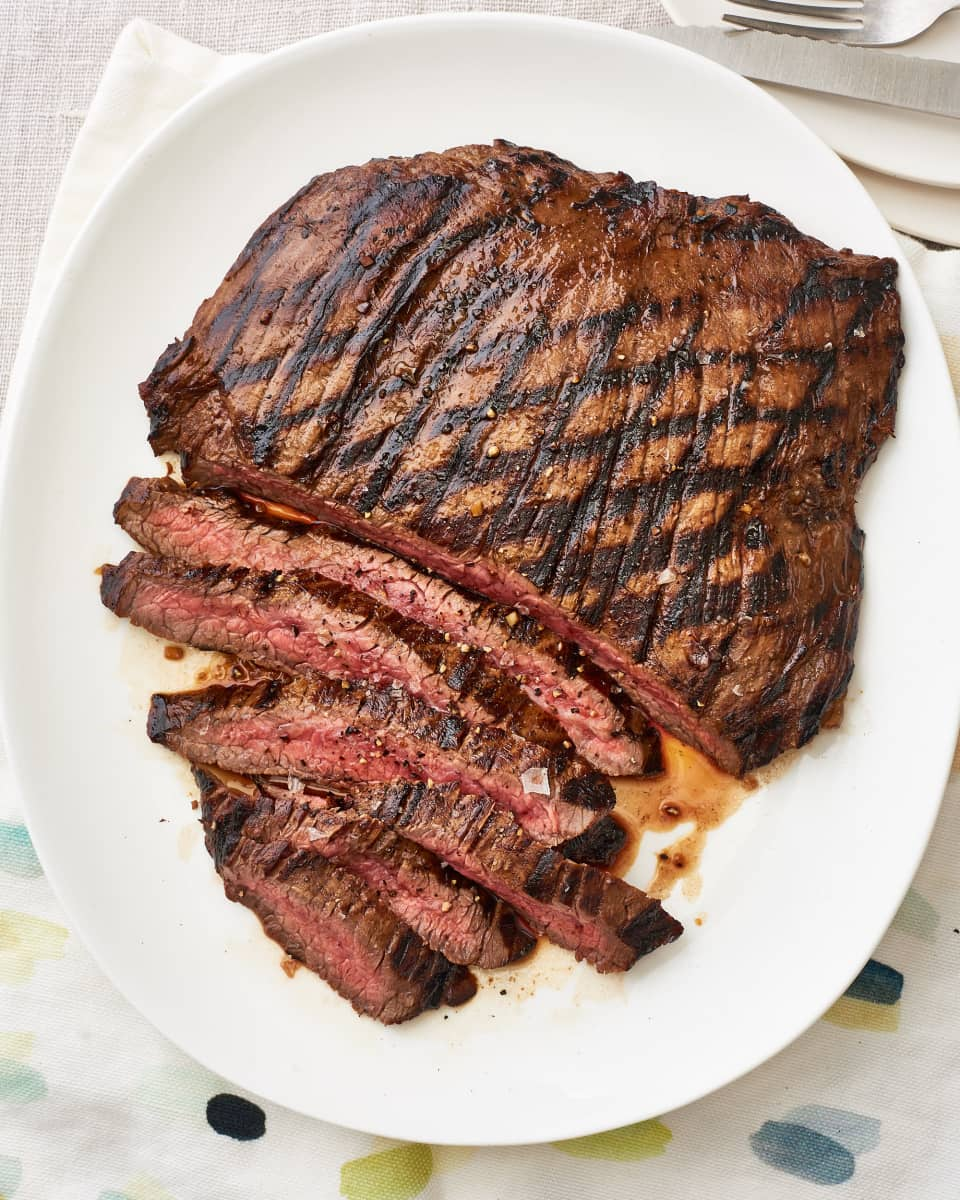
SUPPOSE YOU LOVE A GOOD STEAK, let's say one that is medium rare and juicy, cut from a fine filet and seared to perfection. Whose mouth does not water? Whose taste buds do not yearn for its savor?¹ You want to celebrate something with a friend so you take her to a fine steakhouse.

The beloved in celebration
Let us suppose further that you love your dinner companion, who may also be rare and juicy. Here, even the most stolid TOFian Reader may catch the glimmer of a Truth: viz., that one does not love one's dinner companion in quite the same manner as one loves one's dinner. Though lips and tongue may be enthusiastically engaged in either case, they are not used in quite the same manner.²

The distinction is this:
  • You love your dinner because of the enjoyment you will get from it.
  • You love your companion for her own sake.³
Notes
1. whose mouth does not water? Well, okay, vegans and suchlike. But this is a hypothetical: cf. "suppose." If you lack the empathy to entertain the example, substitute whichever toothsome foodstuff as pleases you for the warmed up muscle tissue of a castrated bovine. TOF himself is passing fond of corn on the cob, which are the sexual organs of a sterile mutant grass.
2. dinner guest vs. dinner. Cannibals excepted.
3. her. Or his. Work with me here.
The former is what Aquinas called "love of concupiscence" [amor concupiscentiae] and the latter, what he called "love of friendship" [amor amicitiae]⁴. Summa Theologiae I-II.26.4

This is clear enough in the case of the steak. You do not love the steak for the sake of the steak. The steak gets nothing out of the relationship save to achieve its final cause; viz., to be digested. This is not so much the good of the dinner as it is for the good of the diner.

The case of the dinner companion is more complex. We enjoy our companion's company, for whatever reason. Perhaps he is a fine story-teller and we enjoy his jokes and stories. But friend-love means we love him for his own sake, not simply because he entertains us and keeps us laughing. Or because he is useful: perhaps we cultivate his friendship in the hope of getting his business. But love is not all about us. It's all about him. Or her.

"Friendship" in our Late Modern Age is a pale shell of its former self. It was once a passionate, robust thing that implied a deep commitment. It was often accompanied by tokens exchanged between the friends, and betrayal of a friendship was a serious matter indeed, often leading to clan feuds or wars. The word in English that comes closest to approximating this meaning today is "buddies," as in "fishing buddies" or "foxhole buddies." Nineteenth century photographs often show men holding hands with their special friends, or with their arms across each other's shoulders; but the Late Modern secular obsession with pelvic issues insists on interpreting such gestures in a prurient manner and we seldom see them any more.⁵ Yet it was often the case among foxhole buddies that one would throw his own body on a grenade to save the others, and it is a truism that "greater love than this hath no man."

Love in the Western, i.e., Christian, tradition was defined simply as "to will the good of the other precisely as other." That is, for his or her own sake, not for our own. It is not defined as an emotion, let alone as a feeling, but as an act of will. And yet surely when we behold our beloved, we experience both emotions and feelings⁶, even if the beloved is not named Shirley. How do we explain this paradox?
Notes
4. concupiscentiae... amicitiae. Note the genitive case endings -ae. This is not love of a thing called concupiscence or friendship, but love generated by concupiscence or friendship. "Genitive" = "born of"
5. seldom sees such gestures. At least in this country. TOF saw it frequently in Chennai, TN, India. Two likely lads walking along with their nigh arms over each other's shoulders and with their outer arms holding hands across their bodies. The pose held no meaning other than friendship, we were assured.
6. emotions... feelings. These are not the same thing.

"What do you want to know about love?  ... Well, there are chemicals in the brain that regulate pleasure..." 
-- Jerry Oltion,
"What Science Means to Me"

As an aside, there are those who claim that all such things are nothing more than the motions of atoms in a void, and they try to explain love by reference to brain chemistry and other such foo-foo.⁷ But TOF's reader can spot the palmed ace. Jerry Oltion in his comment above is not writing about love at all, but about pleasure, a feeling of one's self, and this is not the same thing. To the pleasure-minded hedonist, other people are never quite real. They are only instruments to be used to enhance one's own pleasures. As Aquinas says:
When friendship is based on usefulness or pleasure, a man does indeed wish his friend some good: and in this respect the character of friendship is preserved.  But since he refers this good further to his own pleasure or use, the result is that friendship of the useful or pleasant, in so far as it is connected with love of concupiscence, loses the character to true friendship. -- Summa Theologiae I-II.26.4
If one cannot be loved, it is at least no small thing to be useful. Yet, tools are useful and who wants to be a tool? This is why love is an act of the will and not an emotion or feeling. The feelings of pleasure that we experience are a result of the love, not the love itself.

Pleasure can also lead to love in that the Pavlovian conditioning that associates the pleasure of being in the Other Person's company can lead one to love that Other Person as well. Hence, the pleasurable sex act is called "making" love. The consequence of taking pleasure is love.

So, it works all ways. You can experience pleasure as a result of loving the Other; you can fall in love as a consequence of taking pleasure; or you can love without any physical act of pleasure (which is called Platonic). In our Late Modern world, we have learned that you can even take pleasure without love entering the picture at all.
Notes:
7. Brain chemistry. Or they seem to explain. By their own account, materialists are merely compelled by the forces of physics to say such things.
“It’s not love unless it is unwilling. 
Otherwise, why speak of ‘falling’?” 
-- Méarana Harper, in The January Dancer


One of the great myths of the Late Modern Age is that love is something that happens to you when you are not looking; as if "to love" were a Latin deponent verb: active in sense but passive in form. Hence, "I am in love" rather than "I love." From this stems many of our particular ills.¹

Now, there is a grain of truth to this. The image of Cupid loosing his arrows at the unwitting (or, in India, Kama the Bodiless) is a very ancient one, so it's not just we Moderns who make fools of ourselves. Culture produced the arranged marriage precisely because it could not trust hormone-crazed lust-puppies to make rational decisions in this area. But the grain of truth is also the stone in the shoe. The problem is not that we have a good time with out beloved. It's whether having a good time is our purpose.²

TOF had a HS classmate who was in an arranged marriage. She showed up at the senior dance with an older man (No, not that old.) and told us they had been promised when still children. "But do you love him?" her horrified classmates asked. "I will learn to love him," she answered. This answer was incomprehensible to those raised in the Cupid's Arrow school of modern Hollywood love. We did not understand that love is not a passion but an action; viz., an act of will. And yet, a few years ago her cousin's husband told TOF that she was still happily married to this same man, so go figure.³ Maybe the divorce rate is so high these days because mating choices are generally being made by hormone-crazed lust-puppies.

If people confuse love with the feelings or sensations, then when those feelings or sensations diminish from repetition, they are apt to suppose "love" has died. But a new shoe is apt to pinch and one feels it constantly on one's feet. Once it is "broken in," we no longer notice the shoe; but this in no way means that the shoe has died.
Notes.
1. "in love" vs. "love." And the confusion is spreading. Notice how often you hear "I am supportive of..." instead of "I support..." Is it only verbs of commitment that suffer from this oddly passive construction?
2. for a good time. One sometimes sees on the walls of public lavatories the inscription "For a good time, call Suzy." However, it seldom means that a good time for Suzy is intended.
3. arranged marriage. That's "arranged," not "imposed." The rule is "consent makes the marriage." Think of it as a Very Long Engagement, the advantage of which is the couple learns each other's foibles well before they become irrevocable.

Sex

Since this essay is already too long, TOF will refer Faithful Reader the the post by Eve Keneinan, "The Word 'Sex'" (Last Eden, 25 July, 2015) and mention that the gradual muddying of the term "sex" from noun to verb is largely responsible for the gradual decay of "love" into "my pleasure."

References

  1. Aristotle, Rhetoric Book II Part 4.
  2. Chastek, James (2008). "Families as the principle of harmony for the “dual ends” of sexuality". (Just Thomism, Aug. 5, 2008)
  3. Chastek, James (2016a). "Love as primarily willed or emotional" (Just Thomism, July 15, 2016)
  4. Chastek, James (2016b) "Friendship and incarnation" (Just Thomism, Oct 17, 2016)
  5. Feser, Edward (2016) "Bad Lovin'" (Edward Feser Blog, July 12, 2016)
  6. Feser, Edward (2017) "Mired in the roiling tarpits of lust" (Edward Feser Blog, Feb. 15 2017)
  7. Keneinan, Eve (2016). "The Word 'Sex'" (Last Eden, 25 July, 2015)
  8. Oltion, Jerry (2012) "What Science Means to Me" (Analog, Jan/Feb 2012)
  9. Thomas Aquinas, Summa theologica, I-II, 26, 4.

Prometheus Awards: Read & Watch

 Hello Friends & Fans of Michael Flynn,       The Libertarian Futurist Society has made available the text of the acceptance speech Dad...