1. The Great Ptolemaic Smackdown
2. The Great Ptolemaic Smackdown: Down for the Count
3. The Great Ptolemaic Smackdown:
The Great Galileo-Scheiner Flame War of 1611-13
4. The Great Ptolemaic Smackdown:
The Down 'n Dirty Mud Wrassle
5. The Great Ptolemaic Smackdown: Here's Mud in Yer Eye
6. The Great Ptolemaic Smackdown: Comet Chameleon
7. The Great Ptolemaic Smackdown: Time and Tides Wait Not
8. The Great Ptolemaic Smackdown: Trial and Error
9. The Great Ptolemaic Smackdown: From Plausible to Proven
Showing posts sorted by relevance for query ptolemaic. Sort by date Show all posts
Showing posts sorted by relevance for query ptolemaic. Sort by date Show all posts
Monday, October 7, 2013

Sunday, December 28, 2014
All-Time Top Ten Posts
| Entry | Pageviews | |||||||||
|---|---|---|---|---|---|---|---|---|---|---|
Aug 24, 2013, 35 comments
|
21,653
| |||||||||
Sep 1, 2011, 44 comments
|
13,950
| |||||||||
Sep 14, 2013, 23 comments
|
4,673
| |||||||||
Jul 11, 2014, 14 comments
|
4,354
| |||||||||
Feb 13, 2012, 40 comments
|
3,782
| |||||||||
Oct 24, 2013, 14 comments
|
3,483
| |||||||||
Nov 19, 2013, 40 comments
|
3,251
| |||||||||
Oct 7, 2013, 3 comments
|
3,193
| |||||||||
Jan 23, 2014, 24 comments
|
3,139
| |||||||||
Sep 7, 2013, 10 comments
|
2,911
|
Monday, April 2, 2012
Commentary on Jerry Oltion

For another 'tude, consider Werner Heisenberg. While walking with Heisenberg one day, the physicist Felix Bloch, who had just read Weyl's Space, Time and Matter, felt moved to declare that space is simply the field of linear equations. Heisenberg replied, "Nonsense. Space is blue and birds fly through it." "What he meant," Bloch later wrote, "was that it was dangerous for a physicist to describe Nature in terms of idealized abstractions too far removed from the evidence of actual observation." Let us explore this dichotomy.
Wednesday, August 28, 2013
2. The Great Ptolemaic Smackdown: Down for the Count
In the Previous Post
found here, we saw that the geocentric/geostationary model of the world was not only not unreasonable, but was the best fit for the empirical data that was then available. Inter alia, you could see the stars and planets moving around the earth!Oresme subverted that evidence in 1377 in his Livre du ciel et du monde, with an argument from relativity of inertial reference frames. Whether the Earth were turning and the heavens stood still or vice versa, everything would look the same. He also proposed "common motion" to counter the Argument of the Winds. None of these arguments were conclusive and Oresme lacked the sort of instrumentation that might have provided him with better information or the conceptual lumber (inertia, forces, ...) that would have let him frame the issue.
The main obstacle to the revolution of the Earth was the lack of stellar parallax. Copernicus (among others) proposed that the stars were really far away and thus the parallax would be too small to see with the naked eye. But this was saving one unproven hypothesis by throwing in a second unproven hypothesis. The stars could not possibly be as far away as Copernicanism required because then, given their visible disks, elementary geometry required the stars to be of such enormous size as to dwarf the solar system. Tycho (among others*) thought this absurd, as it would mean an entire class of new entities. The Copernicans answered by saying "Goddidit!" “Who cares how big the stars are?” wrote Christoph Rothmann, since an infinite Creator God is far bigger still.
(*) among others. Little in the history of science is due to Just One Person. There is no
"Father of..." this or that. Those who get credit are typically lucky, more astute in PR, or
standing on someone's shoulders. The best of them, like Newton, will tell you so.
"Father of..." this or that. Those who get credit are typically lucky, more astute in PR, or
standing on someone's shoulders. The best of them, like Newton, will tell you so.
Notice, en passant, that it was the Earth being stationary that mattered, not it's being 'in the center.' The ancients and [especially] the medievals, saw the Earth as being in the bottom of the world, the most ignoble place. That's why Copernicanism was supported by humanists but opposed by physicists. It elevated Earth (and humans) to a higher position in the universe.
1. The Magnificent Seven.
Wednesday, March 5, 2014
America's Next Top Model -- Part II

- Organized simplicity. Systems with few elements. Analyzed mathematically.
- Disorganized complexity. Systems with many elements acting "randomly." Analyzed statistically.
- Organized complexity. Systems with many interconnected elements. Analyzed with operations research/model-building methods.
Joe Martino tells TOF that "One of the most horrible examples I ever encountered was the use of a Cobb-Douglas Production Function to predict the effectiveness of bombing the Ho Chi Minh trail. When I first saw the model it fairly screamed 'wrong!' But the people who put it together saw nothing wrong with it."And yet, these things have so many pretty equations they seem like they damn well ought to work. And they do, in some cases. Kingsbury Bearings has a model for hydraulic bearings that works well in predicting the performance of new bearing designs.* So what's the problem? Operationally, what is the difference between a model that is "useful" and one that is "true"?
(*) hydraulic bearings. TOF digresses. At the entrance to the Kingsbury plant is a placard honoring the Kingsbury Bearing installed in Holtville #5 in 1912. TOF inquired of his hosts in the 1980s when he spent some time with them: "How long did it last?" "We don't know yet," was the response. "It's still running." As of 2008, Wikipedia tells us, it was still running with an estimated TTF of 1300 years. That's craftsmanship! It's also a system whose elements and interactions are pretty well understood.
Saturday, August 24, 2013
1. The Great Ptolemaic Smackdown
TOF once wrote an article entitled "The Great Ptolemaic Smackdown and Down 'n Dirty Mud-Wrassle" which described the century-long progress from the first seriously-worked out heliocentric mathematical model to the final overthrow of geocentrism. A century, more-or-less, is generally what it takes for quantum mechanics, general relativity, and sundry other theories to progress from "wild hypothesis overthrowing the wisdom of the ages" to "standard model," so there was nothing unusual in the resistance to heliocentrism from the scientific establishment of the day. As Max Planck once put it, a new scientific theory gradually gets accepted by scientists because "all the old scientists have died."
Now the aforesaid article appeared in the Jan/Feb 2013 issue of Analog,so it is still technically under the ban. That is, Analog purchased the English language reproduction rights for a year. TOF considered blogging on it in Latin, but that would present its own problems for his Faithful Reader. However, a couple of points suggest themselves.
Now the aforesaid article appeared in the Jan/Feb 2013 issue of Analog,
- The article has appeared on-line as part of the reading for a course in science education, taught by Leonard Bliss at Florida International University in Miami. This non-commercial use was with permission.
- For technical reasons having to do with file size, the article was published without the accompanying artwork and diagrams.
(*) You-Know-Who. Galileo. You knew that, right?
1. Our Ancestors Were Stoopid
Friday, April 22, 2011
The Far-Seeing Looking Glass Goes to China
-->

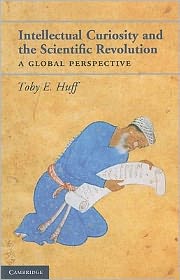
Toby Huff has written a fascinating book: Intellectual Curiosity and the Scientific Revolution in which he studies the spread of the telescope following its invention in Holland and its effect on science in Europe, China, and the two main muslim regions: the Ottoman Middle East and Mughal India. What follows is a summary of how the telescope went to China and what did not happen as a result.
Astronomy in China
Astronomy in China is a state monopoly conducted by the Bureau of Mathematics and Astronomy within the Ministry of Rites, under the Third Minister reporting to the Grand Secretary. The Ministry of Rites is responsible for state ceremonies, rituals, sacrifices, licensing Buddhist and Daoist priests, etc. The Bureau of Mathematics and Astronomy has the main task of preparing the annual calendar (and its regional spin-offs) and identifying lucky and unlucky days. This is the sole purpose of Chinese astronomy, which is why astronomers are called “calendar-makers.” Scientific investigation of the natural world is outside the box. The annual calendar is presented to the Emperor in a grand public ceremony. It includes ephemerides giving meteorological forecasts for each region. Since a failure of the calendar reflects the Mandate of Heaven, it can be dangerous to get these forecasts wrong.
Wednesday, June 13, 2012
The Great Ptolemaic Smackdown

The Great Ptolemaic Smack-Down
and Down-and-Dirty Mud-Wrassle
and Down-and-Dirty Mud-Wrassle
It opens thusly:
HISTORY MUST BE CURVED, for there is a horizon in the affairs of mankind. Beyond this horizon, events pass out of historical consciousness and into myth. Accounts are shortened, complexities sloughed off, analogous figures fused, traditions “abraded into anecdotes.” Real people become culture heroes: archetypical beings performing iconic deeds. (Vansina 1985)
In oral societies this horizon lies typically at eighty years; but historical consciousness endures longer in literate societies, and the horizon may fall as far back as three centuries. Arthur, a late 5th cent. war leader, had become by the time of Charlemagne the subject of an elaborate story cycle. Three centuries later, troubadours had done the same to Charlemagne himself. History had slipped over the horizon and become the stuff of legend.(*)
This suggests that 17th century history has already become myth. Jamestown is reduced to “Pocahontas,” and Massachusetts boils down to “the First Thanksgiving.” And the story of how heliocentrism replaced geocentrism has become a Genesis Myth, in which a culture-hero performs iconic deeds that affirm the rightness of Our Modern World-view.
(*) In AD 778, a Basque war party ambushed the Carolingian rear guard (Annales regni francorum Ann. DCCLXXVIII). Forty years later, Einhard, a minister of Charlemagne, mentioned “Roland, prefect of the Breton Marches” among those killed (“Hruodlandus Brittannici limitis praefectus,” Vita karoli magni [#9]). But by 1098, Roland the “paladin” had become the central character, the Basques had become Saracens, and a magic horn and tale of treachery had been added (La chanson de Roland). Compare the parallel fate of a Hopi narrative regarding a Navajo ambush (Vansina, pp. 19-20).
Thursday, April 21, 2011
The Book Galileo Was Supposed to Write
The Renaissance Mathematicus cites a paper by Prof. Christoper Graney:
In his Almagestum novum from 1651, the Jesuit scientist Giovanni Battista Riccioli "provides a list of 126 arguments pro and contra heliocentricity (49 for, 77 against). ... Seen through Riccioli’s 126 arguments, the debate over the Copernican hypothesis appears dynamic and indeed similar to more modern scientific debates. Both sides present good arguments as point and counter-point. Religious arguments play a minor role in the debate; careful, reproducible experiments a major role. To Riccioli, the anti-Copernican arguments carry the greater weight, on the basis of a few key arguments against which the Copernicans have no good response. These include arguments based on telescopic observations of stars, and on the apparent absence of what today would be called “Coriolis Effect” phenomena; both have been overlooked by the historical record... Given the available scientific knowledge in 1651, a geo-heliocentric hypothesis clearly had real strength, but Riccioli presents it as merely the “least absurd” available model – perhaps comparable to the Standard Model in particle physics today – and not as a fully coherent theory."
Recall that Pope Urban had encouraged Galileo to write a book comparing the systems of the world, listing the strengths and weaknesses of each. What he got was an advocacy for the Copernican system that ignored some vital objections and a satire of a Ptolemaic model which had already been abandoned by Aristotelians. The phases of Venus had decisively falsified the basic Ptolemaic model, but were equally well explained by the Copernican and the Tychonic models. The Tychonic model (and the related Ursine model) were the most popular among scientists by the time Galileo wrote the Dialogue, but he does not so much as mention them, let alone refute them. As it turned out, it was the Keplerian model, with its elliptical orbits, that turned out to be correct. Riccioli's book is more like what the Pope had in mind. Not until there was empirical evidence to choose one model over the other could you say it was fact; and that evidence was not forthcoming until the late 1700s and early 1800s.
Wednesday, September 27, 2017
Eyeballs on TOF
views
45750
| ||||||||||
Sep 1, 2011, 50 comments
|
15931
| |||||||||
Oct 7, 2013, 5 comments
|
9895
| |||||||||
Apr 12, 2017, 10 comments
|
6537
| |||||||||
Mar 28, 2014, 5 comments
|
5750
| |||||||||
Mar 6, 2017, 8 comments
|
5543
| |||||||||
Feb 13, 2012, 40 comments
|
5515
| |||||||||
Apr 2, 2017
|
5027
| |||||||||
Mar 1, 2017, 14 comments
|
4931
| |||||||||
Mar 31, 2017, 1 comment
|
4834
|
Tuesday, May 28, 2013
Quote of the Day. Models and Turism
"A dirty, actually filthy, open secret in statistics is that for any set of data you can always find a model which fits that data arbitrarily close. Finding “statistical significance” is as difficult as the San Francisco City Council discovering something new to ban. The only evidence weaker than hypothesis tests are raw assertions and fallacies of appeal to authority.One way of avoiding this is to pretend that the skill of the model lies in predicting the values of a parameter of the model, which is tested by comparing models against one another and pretending that the differences among models is due to random causes.
The exclusive, or lone, or only, or single, solitary, sole way to check whether any model is good is if it can skillfully predict new data, where “new” means as yet unknown to the model in any way—as in in any way. The reason skeptics exist is because no known model has been able to do this with temperatures past a couple of months ahead."
-- Wm. Briggs, Statistician to the Stars,
"Parliament, The Met Office, And Statistically Significant Temperature Change"
It is also worth noting the Turing Fallacy. The basic programme in AI research is to mimic human performance with a computer algorithm until the mimicry is indistinguishable from actual human responses. Then to assume that whatever the algorithm did to achieve this is what the human mind does to do so. The same may be said of any modeling. If the model outputs do match the Real World™ with adequate precision, it is not guaranteed that what the model was doing matches what the Real World™ does. The Ptolemaic model of the World adequately matched the actual positions of stars and planets for thousands of years; and the Tychonic model was mathematically equivalent to the Copernican model, differing only in the origin point of the coordinate systems. In the end, both the Ptolemaic and the Tychonic systems failed, but they did so for physics reasons, not because the models were a poor fit.
The sad fact is that scientific theories are underdetermined: There will always be multiple theories that account for the same body of facts. IOW, a dirty open secret is that for any set of data you can always find multiple models which fit that data arbitrarily close.
Sunday, September 29, 2013
7. The Great Ptolemaic Smackdown: Time and Tides Wait Not
Previously on the Smackdown
 |
| The faces of Venus |
The discovery of the phases of Venus by a variety of telescopists in the early 1610s has put paid to the long, happy consensus science of the Ptolemaic model, which now languishes on the ash-heap of history. The Aristotelians are gleeful, since Ptolemaic astronomy was at serious odds with Aristotelian physics. (Much like today's quantum mechanics is at odds with relativity.) However, they should hold their gobs, since several bits of Aristotelian Physics have also come under telescopic doubt: the Moon has mountains, Jupiter has moons, the Sun gots freckles, and comets have most unhappy orbits.
None of this proves the Earth is mobile or that the Sun is at the center of the World. The stationary Earth remains unimpeached and her alleged dual motions are falsified in the Popperian sense by a) a lack of visible parallax among the fixed stars (which falsifies the Earth's revolution) and b) a lack of discernible Coriolis effects (which falsifies the Earth's rotation). There are other counterarguments, as well, which await the development of such concepts as inertia. TOF would discuss inertia, but it's hard to get started.
Meanwhile, Galileo has been suckered by the Pigeon League into dabbling in Scriptural interpretation, never a good idea for an amateur during a Protestant Revolution. He's been cleared of suspicion of heresy in a confidential investigation, but in the process Copernicanism has attracted the notice of the Authorities -- who are mostly lawyers and politicians. Galileo tried to re-interpret Scripture because of his commitment to Copernicanism-as-physically-real and -- much as people react to a mass shooting by concern over guns (rather than, say, lunatics) -- the Authorities react to this free-lance exegesis by a concern over heliocentrism.
A decree of the Index had removed Copernicus' book from circulation for a few years pending a couple of corrections to statements that seem to assert the physical reality of the model. Galileo has been cautioned not to hold or teach the theory other than as a mathematical model. However, the late Cardinal Bellarmino had written that if a demonstration could be shown, there would be little problem in clearing up the Scriptural issues. The Church has never insisted on strict literalism. But while the Church, holding that Truth is One, would have no problem reading a scripture non-literally if the literal reading could be certainly demonstrated false, they are not about to do so for the sake of a plausible mathematical hypothesis. Given the history of science, this would hold exegesis hostage to phlogiston, or any other scientific fashion.
So all Galileo needs to do now is present empirical evidence that the Earth has a dual motion. Piece of cake.
Or is it?
Saturday, January 28, 2012
It's Only a Theory

Some of this is due to a broader misunderstanding -- of the metaphysics of Aristotle. Many terms of art, like "matter" and "motion," are used today in different senses than they were when he wrote, and so it happens that what he wrote is oft misread.
But TOF, you say, since we are talking about SF, what will be the SF connection?
Patience, my pretties. All will become clear, for some values of "clear."
More below the cut
Thursday, August 8, 2013
Scientism redux
 |
| Stick or switch? |
Consider the Monte Hall problem, which puzzled even pros because they forgot that the problem was not probabilistic. Monte Hall did not use random chance to choose which door he would open. Let us call this tendency to apply the rules of probability even in non-random situations probabilism. Which serves as today's lead-in.
Thursday, June 20, 2024
Gloria Estefan Was Wrong

It's the bots.
I've turned comment moderation on for The TOF Spot because it was overrun with spam comments. I just don't have the time or the energy to be on here daily like Dad was (lol or weekly or...) and I guess since the blog isn't really maintained anymore, the bots are just throwing up trash comments on his more popular posts. I've just spent time deleting them all, and there's still more to go through.
It's offensive to me personally that they're posting on his death announcement, even though I know it's a bot and not necessarily malicious in that sense. They were also all over that Ptolemaic Smackdown post, which I know was a more popular one of his.
Anyway, I set it up to notify if there's a new comment so ... let's see how terrible this is. If I get a ton of notifications of spambots then ah well. But maybe the closed comments will turn the bots away in search of a recipe blog instead.
Tuesday, October 8, 2013
Retroview: The Wreck of "The River of Stars"
Apologia pro blogpost sua: An earlier, incomplete draft of this may have posted temporarily before the gods of BlogSpot obliterated it by freezing up the Insert Picture tool. This is a re-draft from scratch.
+ + +
 |
| Ain't TOF cute? |
The Wreck, if we may call it by its nicktitle, was called by one reviewer "the best hard-SF tragic novel of character yet written," adding "though this is an uncrowded niche." Uncrowded, indeed. Run out and buy a copy. I'll wait.
Saturday, April 25, 2015
Underdetermination
 |
| Natalie Wolchover, Quanta Magazine |
Although in matters of religion the existence of multiple interpretations is said to prove that there is no "there" there, it does not do so in matters of Science!™ because Invisible Sky Fairies! It is simply in the nature of theories that there can always be more than one for any given set of data. Recall how, at the dawn of the modern age there were multiple theories explaining the motions of the heavens, with the Ptolemaic theory being the most popular, the "consensus science." The calculations worked, but they did not tell us how the planets moved as they did.
But "the quanta are a hopeless mess" and it is useful to have a more homey example of underdetermination. Detective fiction is good at this: maintaining multiple theories of whodunnit until the end, when a new fact or a new arrangement of the facts collapses the potencies into an actual. The new fact may be the discovery of stellar aberration or the Afshar Experiment.
But here is an example of how a fact may support multiple theories:
Matt Briggs, the Statistician to the Stars, recently noted a kerfuffle in the rarefied world of chess.
Chess Grandmaster Nigel Short caused a stink, reaching oooo-weee! but not quite burn-him! levels, when he said that men and women are different and that men are better at chess than women.Let's call these the Short Theory and the Ross Theory.
Female chess player Amanda Ross said in response that, it is “incredibly damaging when someone so respected basically endorses sexism”. Sexism is when a disparity of any kind exists between males and females.
So let us appeal to the Facts! In a list of living Grandmasters, there are:
- 1413 men
- 33 women.
It also supports Ross's theory that sexism in chess suppresses women's achievement.
This is why proponents of a theory are seldom swayed by the facts. Facts alone have no swaying power, since they will (and must) be interpreted in the light of some theory.
Notes:
1. Further confused by the fact that the mathematical formalism common to them all is also referred to broadly as "quantum theory." But "quantum theory" as such is not a theory.
2. For the record, four that come trippingly to mind are:
a) Copenhagen (Bohr, Heisenberg), which reifies Aristotelian potencies until measurement collapses reality onto one of them.
b) Standing Wave (deBroglie, Bohm), in which the particle rides on the wave.
c) Many Worlds (Wheeler) in which all potencies are actualized, but in different worlds.
d) Transactional (Cramer) in which the wave travels backward as well as forward in time, thus reifying final cause.
Wednesday, March 19, 2014
Disaster at Lunacon!
TOF was "special guest" at Lunacon this past weekend, and very special he was. He got to wear a ribbon like unto a prize steer at the stock show and had melons placed under his arms. In return, he sat upon certain Panels, picked a Winner at the Art Show, and started a presentation on THE GREAT PTOLEMAIC SMACKDOWN.
Wednesday, July 18, 2012
Required Reading/Required Writing

The September issue of ANALOG contains my Novelette, "Elmira, 1895"
He came with the night mail on the West Shore Line at just that moment when the world teetered between one day and the next. Midnight is a magic time, the single instant when there is no present; only a receding past and an unrealized future. He stood alone on the platform with his greatcoat and valise and watched the red lanterns of the caboose vanish into the night.
The breezes whipped up by the train’s passing died, and with them the fading clackety-clack of wheels on rails. The flurry of activity that had greeted the mail’s arrival – station-master, post-master, Negro porters, conductor – had evaporated like ghosts. The stars looked down on the empty platform through a cloudless sky, unreachable and yet at the same time unbearably close. On nights like this, the stars alone could cast shadows; and would have done so had the gas lamps lining the platform not overwhelmed them. Their guttering flames peopled the station with silent, capering shadows.
A gentle rain of soot and cinders fell in the locomotive’s wake and the man brushed absently at his sleeves and shoulders. It was a warm night and damp with the recent rains. A wretched hour to arrive anywhere; but Elmira was as remote as Khatmandhu so far as railroads were concerned and midnight it was, “unless the gentleman would care to wait until tomorrow.”
The gentleman would not, and so the night mail it had been. He looked around to get his bearings and, hefting his valise in one hand and draping his greatcoat over the other arm, he strode briskly to the stairs at the end of the platform. The worried glance he spared just before stepping off was aimed not at the lights of the departed train, but at the glimmering stars overhead – as if he expected that at any moment one would drop and strike him upon the head.
#
The frowsy hotel was just as he remembered it, though five years had gone since he had last stayed there. The night clerk was a shrunken and wrinkled old man, aged in a pickle vat. He looked up when the bell rang, but gave no sign of recognition, and made no comment while the stranger signed the register. He did, however, drop the double-eagle on the countertop to hear its ring before placing it in the strongbox. “You must receive a fine class of boarder these days,” the stranger commented dryly. But the clerk simply shrugged – a comment as eloquent as a thousand words from lesser lips. He handed over a heavy brass key with the number 28 stamped into it in uneven numerals. The stranger hefted his valise. “I was told Mr. Clemens was in town,” he said.
“Couldn’t say,” the clerk answered. Then, as if words cost four bits apiece, “Hear tell, he’s down Ha’tford way.”
The stranger shook his head. “I’ve just come by way of Hartford. They told me that he had come here.”
The clerk chuckled. “That man Clemens is full of comin’s and goin’s, Mr....” His eyes dropped to the register, reading it upside down. “Mr. Kipling. Don’t clear his travels with me, anyways.”

And for those demanding a double-dose of Flynn -- and there may be one or two of you out there -- the new October issue of ANALOG contains another novelette, "The Journeyman: On the Shortgrass Prairie," already previewed here.
Still in the pipeline, but likely to be in the Jan/Feb double issue, is the special feature: "The Great Ptolemaic Smackdown and Down-and-Dirty Mud Wrassle," previewed here.
What's in the Works, O TOF?
...I hear you ask.
Well...
Thursday, March 13, 2014
TOF at Lunacon
TOF is "special guest" at Lunacon this weekend. If you're near the RyeTown Hilton, here is his schedule AFAIK
- Fri 4:00 PM Character Building Bartell Your clever plot twist or interesting theme will mean nothing if readers don't care about your characters. The panelists will discuss techniques to use to make sure your characters are memorable and that the story is about them.
- Fri 10:00 PM Rules! Rules????? There are no Rules! William Odelle When writing fiction, if it works, it works. Our panel debates whether authors need to know "rules" that they can then break if they are good enough, or if this only constrains creativity.
- Sat 11:30 AM Reading: Michael Flynn Elijah Budd
- Sat 2:00 PM Alternate History That Isn't About War William Odelle Can't we imagine alternate history about something other than the outcomes of battles. Think of how history might have changed if certain IDEAS had formed differently or come at different times.
- Sat 3:00 PM Magic and Religion Westchester Ballroom A2 How do Magic and Religion intertwine?
- Sat 4:00 PM Autographing: Michael Flynn Westchester Assembly
- Sun 1:00 PM The Great Ptolemaic Smackdown Westchester Ballroom B How the heliocentric world replaced the geocentric one against all evidence and common sense.
Subscribe to:
Posts (Atom)
Prometheus Awards: Read & Watch
Hello Friends & Fans of Michael Flynn, The Libertarian Futurist Society has made available the text of the acceptance speech Dad...

-
TOF once wrote an article entitled "The Great Ptolemaic Smackdown and Down 'n Dirty Mud-Wrassle" which described the century-l...
-
 Previously: Part 8, Trial and Error From Plausible to Proven The great dishonesty of Galileo’s Dialogue was to present a contes...
 -
 Hello family, friends and fans of Michael F. Flynn. It is with sorrow and regret that I inform you that my father passed away yesterday,...


